 0
0
 0
0
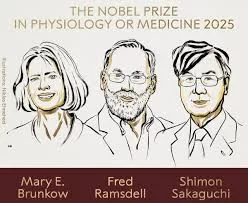
Mary E. Brunkow, Fred Ramsdell, and Shimon Sakaguchi have been awarded the 2025 Nobel Prize in Physiology or Medicine for their groundbreaking discoveries concerning peripheral immune tolerance, a vital mechanism that prevents the immune system from attacking the body’s own tissues. Their work fundamentally enhances our understanding of immune regulation and opens pathways to better treatments for autoimmune diseases, cancer, and transplant rejection.
Breakthrough in Immune System Regulation
The human immune system is a powerful defense network protecting us from thousands of microbes daily. However, this defense must be tightly regulated to avoid mistakenly attacking the body’s own organs and tissues—a phenomenon that underlies autoimmune diseases. The laureates uncovered how this regulation is achieved by specialized immune cells called regulatory T cells (Tregs), sometimes described as the immune system’s “security guards.”
Before their discoveries, the scientific consensus held that immune tolerance largely resulted from the elimination of potentially harmful immune cells during their development in the thymus, a concept known as central immune tolerance. In 1995, Professor Shimon Sakaguchi challenged this view by identifying a previously unknown population of immune cells—regulatory T cells—that operate outside the thymus to suppress damaging immune responses, thus establishing the concept of peripheral immune tolerance.
The Foxp3 Gene and Autoimmune Disease
In a complementary discovery in 2001, Mary Brunkow and Fred Ramsdell identified a gene mutation responsible for severe autoimmune symptoms in a specific strain of mice (scurfy mice). This gene, named Foxp3, was later found to govern the development and function of regulatory T cells. Mutations in the human equivalent, FOXP3, cause a rare, life-threatening autoimmune disorder called IPEX syndrome.
Dr. Brunkow and Dr. Ramsdell’s work linked the Foxp3 gene to the critical role of regulatory T cells in maintaining immune self-tolerance. Subsequent research by Shimon Sakaguchi confirmed that Foxp3 is a master regulator gene essential for regulatory T cell identity and function. This integrated understanding launched new research into peripheral tolerance mechanisms.
Expert Perspectives
Olle Kämpe, chair of the Nobel Committee, emphasized the importance of these discoveries: “Their work has been decisive for our understanding of how the immune system functions and why not all of us develop serious autoimmune diseases.” Immunologists worldwide praise these findings as a milestone in immunology, offering hope for therapeutic interventions in diseases caused by immune dysregulation.
Dr. Anita Verma, an immunologist not involved in the research, explains, “Understanding regulatory T cells has transformed the way we think about treating autoimmune diseases and immune-related complications. This discovery has paved the way for therapies that either boost Treg functions to suppress autoimmunity or inhibit them to enhance anti-cancer immunity.”
Implications for Public Health and Therapy
The discovery of peripheral immune tolerance and regulatory T cells has profoundly influenced medical research and clinical practice. By modulating regulatory T cells, scientists are developing novel treatments for autoimmune diseases such as type 1 diabetes, multiple sclerosis, and rheumatoid arthritis, aiming to restore immune balance without broad immunosuppression.
In cancer therapy, regulatory T cells are targets to reduce immune suppression within the tumor microenvironment, enhancing the body’s ability to attack cancer cells. Furthermore, improving peripheral tolerance may reduce the risk of transplant rejection—boosting the success and longevity of organ transplants.
Numerous clinical trials are ongoing to test treatments inspired by these discoveries, including therapies that expand regulatory T cells or modulate their activity in various diseases.
Limitations and Future Directions
Despite these advancements, challenges remain. The immune system’s complexity means that therapeutic manipulation of regulatory T cells must be finely tuned to avoid unintended consequences, such as increased susceptibility to infections or cancer. Also, autoimmune diseases are heterogeneous, and therapies may need to be personalized.
Ongoing research aims to further elucidate the molecular mechanisms of peripheral tolerance, to improve therapeutic specificity and safety. The laureates’ work establishes a foundation for a new era in immunology, promising better health outcomes for patients worldwide.
Medical Disclaimer
Medical Disclaimer: This article is for informational purposes only and should not be considered medical advice. Always consult with qualified healthcare professionals before making any health-related decisions or changes to your treatment plan. The information presented here is based on current research and expert opinions, which may evolve as new evidence emerges.
References
- https://www.nobelprize.org/prizes/medicine/2025/press-release/
- https://www.nobelprize.org/prizes/medicine/2025/popular-information/