 0
0
 0
0
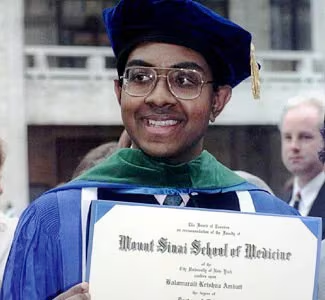
In 1995, Balamurali Ambati made history by becoming the world’s youngest licensed physician at just 17 years and 294 days old, a record recognized by Guinness World Records. Based in the United States, Dr. Ambati’s extraordinary achievement echoes the remarkable journeys of other medical prodigies who entered medicine at extraordinarily young ages. These stories, reflecting a blend of early intellectual talent and emotional resilience, challenge traditional medical education norms and offer insights on the value of empathy and maturity alongside raw intelligence.
Key Findings: Who Are the Youngest Doctors?
Dr. Balamurali Ambati, born in India in 1977, started medical school at age 14 at Mount Sinai School of Medicine in New York City. He graduated with his medical degree in 1995 before turning 18, scoring above the 99th percentile on the National Medical Boards. This feat made him the youngest doctor to receive a medical license in the world.
Following a similar prodigious path was Dr. Sho Yano, who began medical school at just 12 years old at the University of Chicago and completed his MD/PhD by age 21. Dr. Yano now focuses on pediatric neurology and genetics, exemplifying how early starters in medicine continue to contribute meaningfully to specialized medical fields.
In India, Akrit Jaswal stands out as a different kind of prodigy, having begun practicing medicine informally at an awe-inspiring age of 7, with a remarkable self-taught knowledge base. Meanwhile, R. Venkataraman achieved the distinction of being the youngest doctor in Tamil Nadu at age 18, showcasing that prodigious achievement in medicine is not limited to one geography.
Beyond IQ: The Importance of Emotional Intelligence and Resilience
While intelligence and academic achievement are foundational, these young doctors emphasize the critical role of emotional intelligence (EQ) and resilience in clinical practice. Dr. Ambati noted that despite his intellectual gifts, personal fulfillment and growth came from patient care and experiencing human connection beyond textbooks and exams.
Similarly, Dr. Yano acknowledges biases he encounters due to his youthful appearance, which influences patient trust and communication. He underscores the necessity for empathy, understanding patients’ perceptions, and refining interpersonal skills—traits that traditional academic metrics don’t measure but are vital for effective medical practice.
Medical Education and Public Health Context
These young doctors’ journeys highlight evolving perspectives on medical education. Traditionally, medical training follows a linear timeline starting after secondary education in late adolescence or early adulthood. However, prodigies like Ambati and Yano illustrate that age is not the sole determinant of readiness; learning capacity, emotional maturity, and support systems play significant roles.
From a public health standpoint, encouraging pathways for gifted students could address physician shortages, spark innovation, and diversify the workforce. However, they also raise questions about how education systems can balance intellectual acceleration with the psychosocial development required for responsible care.
Implications for Readers and Healthcare Providers
For the public, these stories demonstrate that there is no single “correct” way to become a competent, compassionate doctor. Age and traditional timelines are less important than ongoing learning, empathy, and patient-centered care. For healthcare providers and educators, embracing flexibility in training and recognizing diverse talents can enrich the profession.
Limitations and Counterpoints
Despite remarkable achievements, critics stress caution. Accelerated education may impose intense stress and social challenges. Young physicians might face skepticism from patients or colleagues, and their experience is naturally limited in initial years compared to older peers.
Moreover, the rarity of such prodigies means they are exceptions rather than models for typical educational pathways. Sustained mentorship, emotional support, and ongoing professional development are critical to ensure these doctors thrive long term.
Expert Commentary
Dr. Annette Johnson, Professor of Medical Education at a leading U.S. medical school (not involved with the research), notes, “Prodigies like Ambati remind us that intellectual brilliance can appear early, but medicine demands more than knowledge alone. The cultivation of emotional intelligence, resilience, and ethical judgment is equally vital.” She emphasizes that these stories should inspire educational innovation while maintaining safeguards to support holistic development.
Conclusion
The stories of the youngest doctors in history—marked by extraordinary intellect combined with personal resilience and dedication—challenge conventional views on medical training. They provide hope that medicine can adapt to nurture exceptional talents while underscoring the timeless importance of empathy and patient connection. For all readers, these narratives affirm that excellence in healthcare arises from both the head and the heart.
Medical Disclaimer:
This article is for informational purposes only and should not be considered medical advice. Always consult with qualified healthcare professionals before making any health-related decisions or changes to your treatment plan. The information presented here is based on current research and expert opinions, which may evolve as new evidence emerges.
References