 0
0
 0
0
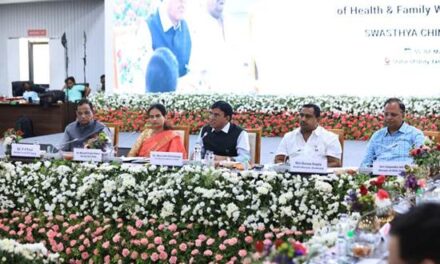
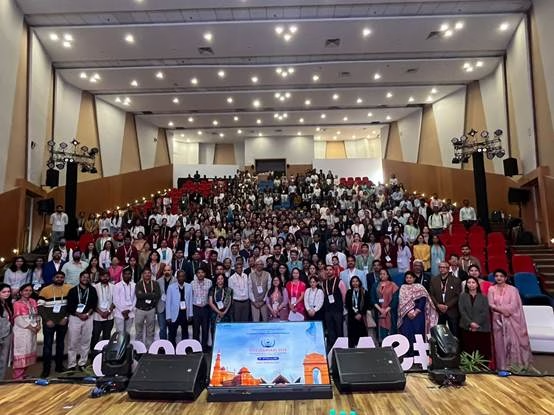
NEW DELHI — In an era where scientific breakthroughs are often measured by the volume of publications rather than their impact on patient bedsides, India’s premier medical research body is staging a quiet revolution. From February 19 to 21, the Indian Council of Medical Research (ICMR) convened SANVAD 2026 (Scholars’ Assembly for Next-gen Ventures to Advance their Development), a high-stakes gathering of nearly 400 doctoral scholars aimed at dismantling the “ivory tower” of academic research.
The three-day conclave, hosted at the ICMR–National Institute of Malaria Research (NIMR), signals a strategic shift in how India intends to train its future scientists. The goal? To move away from “tick-box research”—the practice of doing the bare minimum to earn a degree—and toward high-impact science that addresses the country’s unique public health challenges.
A Call for “Serious and Meaningful” Science
The centerpiece of the event was a candid Town Hall led by Dr. Rajiv Bahl, Secretary of the Department of Health Research and Director General of ICMR. Addressing a room full of India’s brightest young minds, Dr. Bahl issued a direct challenge to the traditional academic mindset.
“I urge scholars to conduct serious and meaningful research and avoid what I call ‘tick-box research’,” Dr. Bahl told the assembly. He emphasized that the value of a PhD should not be found in the certificate, but in the voluntary pursuit of high-quality research papers that can withstand international scrutiny.
His comments come at a critical time. While India ranks among the top countries globally for the number of scientific publications, the “impact factor”—a measure of how often that research is cited and used by others—has historically lagged behind. By focusing on “innovation orientation” and “leadership readiness,” SANVAD aims to close this gap.
Bridging the Gap: From Lab Bench to Patient Bedside
One of the most persistent hurdles in medical science is “translation”—the process of turning a discovery made in a laboratory (the bench) into a treatment that helps a patient (the bedside).
Padma Shri Prof. Kameshwar Prasad, a renowned neurologist, headlined a session on clinical research that hit home for many attendees. He argued that research loses its value if it remains trapped in academic journals without reaching the community. This sentiment was echoed by Dr. Vishwajeet Kumar, founder of the Community Empowerment Lab, who urged scholars to ensure their work has a “tangible community impact.”
For the average citizen, this focus on “bench-to-bedside” research is vital. It means that Indian scientists are being encouraged to prioritize local health issues—such as tropical diseases, maternal health, and nutrition—ensuring that taxpayer-funded research eventually leads to more affordable and effective healthcare.
Key Focus Areas of SANVAD 2026:
-
Grassroots Innovation: Learning from indigenous solutions and societal needs.
-
Evidence Synthesis: Using systematic reviews to ensure policy is based on solid data.
-
Health Communication: Training scientists to speak to the public, not just each other.
-
Career Diversity: Opening pathways into the pharmaceutical industry and public policy.
Why Communication is the New Scientific Metric
In a notable departure from standard technical conferences, SANVAD 2026 dedicated a major technical session to Health Communication. The consensus among experts was clear: a scientist who cannot explain their work to a policymaker or a patient has only finished half the job.
“Impactful research does not end with publication,” experts noted during the session. In an age of medical misinformation, the ability of researchers to communicate “strategically, clearly, and persuasively” is now seen as a core competency. For the public, this represents a move toward greater transparency and more accessible health information directly from the source.
Perspectives from the Field
While the atmosphere was one of excellence, the leadership also addressed the mental health toll of high-level research. Dr. Bahl made a nuanced distinction between “pressure” and “stress,” advising researchers to manage the former constructively to fuel their work without succumbing to the latter.
Independent experts not involved in the conclave view this as a necessary evolution. “The PhD journey in India has often been a lonely, siloed experience,” says Dr. S. Chatterjee, a public health consultant (not affiliated with ICMR). “A platform like SANVAD that encourages interdisciplinary dialogue—where a malaria researcher talks to a nutritionist—is how we solve complex problems like stunting or drug resistance.”
However, some critics point out that for this “next-gen” vision to succeed, systemic issues like consistent funding and administrative autonomy within research institutes must be addressed alongside the scholars’ mindset.
Looking Ahead: The Road to Hyderabad
The 2026 edition concluded with the “Mindstorm@ICMR” Research Quiz and awards for outstanding presentations, but the momentum is designed to be permanent. To ensure this isn’t a one-off event, ICMR has announced that SANVAD will be a rotating national platform. The 2027 edition is already slated to be hosted by the ICMR–National Institute of Nutrition (NIN) in Hyderabad.
By decentralizing these gatherings, ICMR hopes to expose scholars to diverse research ecosystems across India, from the infectious disease labs of Delhi to the nutritional science hubs of the South.
For the young scientists leaving New Delhi this week, the message was clear: The “Dr.” before their name is not a destination, but a tool to be used for the nation’s health.
Medical Disclaimer: This article is for informational purposes only and should not be considered medical advice. Always consult with qualified healthcare professionals before making any health-related decisions or changes to your treatment plan. The information presented here is based on current research and expert opinions, which may evolve as new evidence emerges.
References
Official Sources:
-
Press Information Bureau (PIB) Delhi: “ICMR Convenes SANVAD 2026 to Nurture Next-Generation Research Leaders,” Posted 22 Feb 2026.