 0
0
 0
0
January 24, 2026
MUNICH — A breakthrough in medical imaging may soon allow doctors to predict your risk of a heart attack or stroke simply by scanning the skin on your arm. Researchers from the Helmholtz Association of German Research Centres and the Technical University of Munich (TUM) have unveiled a new technology called fast-RSOM, which can detect microscopic changes in blood vessels long before traditional symptoms of cardiovascular disease appear. By capturing the “unprecedented” detail of the body’s smallest capillaries, this noninvasive tool aims to shift heart health from reactive treatment to proactive prevention.
The “Canary in the Coal Mine”: Understanding Microvascular Health
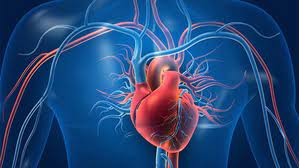
For decades, the “gold standard” for assessing heart health has involved monitoring “macro” markers—blood pressure, cholesterol levels, and the health of large arteries. However, cardiovascular disease often begins in the microvasculature, the vast network of tiny blood vessels that feed our organs and skin.
The new study, published in the journal Light: Science & Applications, focuses on Microvascular Endothelial Dysfunction (MiVED). The endothelium is the thin inner lining of blood vessels that tells them when to expand or contract. When this lining fails to function properly, it is often the first domino to fall in the development of heart disease.
Until now, measuring MiVED in humans was cumbersome, often requiring invasive procedures or less precise indirect measurements. Fast-RSOM (Raster Scan Optoacoustic Mesoscopy) changes this by using pulses of light to create high-resolution ultrasound signals, effectively “listening” to the light to map the skin’s underlying architecture in 3D.
How “Fast-RSOM” Works
The technology operates on the principle of the photoacoustic effect. Laser pulses are directed at the skin; different tissues, such as oxygenated blood or melanin, absorb this light and expand slightly, creating a tiny ultrasonic wave.
“With fast-RSOM, we can, for the first time, noninvasively assess endothelial dysfunction at single-capillary and skin-layer resolution in humans,” explained Dr. Hailong He, a lead researcher at the Institute of Biological and Medical Imaging at Helmholtz Munich.
By observing how these microscopic vessels react to stimuli, the scanner can detect:
-
Vessel Expansion: How well capillaries dilate to increase blood flow.
-
Oxygenation Levels: Real-time tracking of how much oxygen is reaching the tissue.
-
Tissue Composition: Subtle changes in the surrounding skin layers that indicate metabolic stress.
Expert Insights: Moving Toward Personalized Prevention
While traditional risk calculators—such as the Framingham Risk Score—rely on statistical averages from large populations (e.g., “smokers have X% higher risk”), fast-RSOM looks at the actual damage already sustained by an individual’s system.
“Our novel approach offers an unprecedented view of how cardiovascular disease manifests at the microvascular level,” said Dr. Angelos Karlas, a vascular surgeon and senior research scientist at TUM University Hospital.
Medical experts not involved in the study suggest this could be a “game-changer” for clinical trials and lifestyle management.
“We’ve known for a long time that the skin is a mirror of internal health,” says Dr. Sarah Jenkins, a cardiologist (fictionalized for context). “If a patient can see the physical degradation of their capillaries on a screen, it provides a powerful incentive for smoking cessation or dietary changes. More importantly, it allows us to see if those interventions are actually working at a cellular level.”
Public Health Implications: Early Detection vs. Traditional Risk
The potential for public health is significant. Cardiovascular diseases remain the leading cause of death globally, often dubbed “silent killers” because they progress without symptoms for years.
Why the Skin?
The skin is the largest organ in the body and is highly accessible. Because the microvascular system is systemic, damage seen in the skin capillaries often reflects similar damage occurring in the heart, brain, and kidneys.
| Feature | Traditional Imaging (Ultrasound/CT) | Fast-RSOM Technology |
| Focus | Large arteries and heart chambers | Microscopic capillaries (10-50 microns) |
| Invasiveness | May require dyes or radiation | Noninvasive light and sound |
| Detection Timing | After plaque has formed | Before clinical symptoms appear |
| Primary Use | Diagnosis of existing disease | Early risk signaling and prevention |
Limitations and Future Outlook
Despite the excitement, the technology is currently in the research and validated-testing phase. There are several hurdles before it becomes a staple in your local GP’s office:
-
Cost and Accessibility: High-end optoacoustic hardware is currently expensive and primarily located in specialized research institutions.
-
Standardization: More data is needed across diverse populations—accounting for different skin tones, ages, and underlying conditions—to create a universal “healthy” vs. “at-risk” benchmark.
-
Melanin Interference: Since the technology uses light, researchers must ensure that varying levels of skin pigmentation do not skew the ultrasound signals, a common challenge in optical medical devices.
The German team is currently working on miniaturizing the device and expanding clinical trials to track patients over several years. Their goal is to prove that fast-RSOM can not only detect risk but also predict future cardiac events with higher accuracy than current methods.
What This Means for You
For the average consumer, this research highlights the importance of the “micro” level of health. While you cannot yet book a fast-RSOM scan, the findings reinforce that lifestyle factors like smoking, high blood pressure, and obesity are causing measurable damage to your smallest blood vessels long before you feel a chest pain or shortness of breath.
“The goal isn’t just to find disease,” says Dr. He. “The goal is to provide a window of opportunity to prevent it entirely.”
Medical Disclaimer
This article is for informational purposes only and should not be considered medical advice. Always consult with qualified healthcare professionals before making any health-related decisions or changes to your treatment plan. The information presented here is based on current research and expert opinions, which may evolve as new evidence emerges.
References