 0
0
 0
0
December 14, 2025
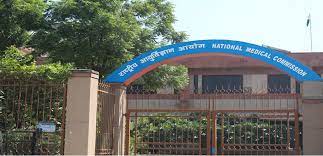
New Delhi – In a significant observation that sets a new benchmark for medical education in India, a parliamentary panel has asserted that the prestigious international accreditation recently granted to the National Medical Commission (NMC) should be viewed not as a final victory, but as the “beginning of its responsibility.” The Department-related Parliamentary Standing Committee on Health and Family Welfare, in a report presented to the Rajya Sabha on Thursday, emphasized that the global recognition brings with it a heightened duty to ensure equitable, high-quality, and evidence-based medical training across the nation.
The observation comes in the wake of the World Federation for Medical Education (WFME) conferring its recognition status upon the NMC for a tenure of 10 years—a landmark achievement that aligns Indian medical education with global standards. However, the committee’s report serves as a crucial reality check, urging the apex regulator to look beyond the accolades and address systemic gaps in infrastructure, research, and accessibility.
The Weight of Global Recognition
The WFME accreditation is a pivotal development for the Indian medical fraternity. Historically, this recognition is a prerequisite for medical graduates to pursue postgraduate training and practice in several developed nations, including the United States, Canada, Australia, and New Zealand.
With this status, graduates from India’s 706+ medical colleges are now eligible to apply for the Educational Commission for Foreign Medical Graduates (ECFMG) certification and the United States Medical Licensing Examination (USMLE).
“The international accreditation to NMC is not the end of NMC’s role but the beginning of its responsibility towards strengthening equitable quality education system across the country,” the parliamentary panel stated in its report. The committee stressed that the NMC must now focus on “evidence-based practices with scientific and modern advancement, critical thinking to imbibe professional pursuit, ethical integrity and social behavioral inclination amongst medical practitioners.”
Infrastructure and ‘Scientific Temper’
The report highlighted that a “global tag” holds little value without a robust domestic foundation. The panel pointed out that ensuring quality medical education is the only guarantee for the country’s future healthcare security. This requires more than just curriculum updates; it demands a structural overhaul of how medical education is delivered.
Key among the committee’s observations was the need for adequate investment in advanced physical infrastructure. The panel argued that modern medicine cannot be taught in outdated facilities. They called for a system that fosters “affordability and accessibility,” ensuring that the benefits of high-quality education reach students from diverse socio-economic backgrounds.
Dr. R.K. Sharma, a senior medical educationist and former dean of a government medical college, weighed in on the panel’s findings. “The committee has hit the nail on the head. Accreditation is a process, not a destination,” he said. “We often see colleges meeting the ‘minimum requirements’ on paper to get NMC approval. The WFME standard, however, demands a culture of continuous quality improvement. The NMC must now transition from a policing body to a quality-enabling body.”
The Research Deficit: A Critical Concern
One of the sharpest criticisms in the report was reserved for the state of medical research in India. The committee expressed dissatisfaction with the government’s response regarding budgetary support for research work.
According to the report, spending on health research by both the government and medical colleges has remained “stagnant” in terms of percentage of GDP over the last few financial years. This stagnation persists despite the lessons learned during the global pandemic, which underscored the vital need for indigenous research capabilities.
The panel recommended a “massive impetus” for medical research and innovation. It suggested a two-pronged approach:
-
Substantial Increase in Expenditure: The government must drastically hike spending on health research infrastructure.
-
Public-Private Collaboration: Creating an ecosystem that encourages collaboration with leading private research firms to drive innovation.
To ensure that research is not just academic but “result-oriented and gainful,” the committee proposed that the government formulate guidelines to prioritize research fields based on the country’s specific disease burden.
“Colleges can form a collegium of senior faculties and decide on the research priority,” the report suggested, proposing a funding model where costs are shared between the institute and government agencies like the Indian Council of Medical Research (ICMR).
Reducing Reliance on Foreign Medical Graduates
The report also touched upon the sensitive issue of Foreign Medical Graduates (FMGs). While acknowledging that FMGs currently help bridge the doctor-population gap, the committee reiterated the need for India to become self-reliant in medical education.
“In order to improve the doctor-to-population ratio and to reduce the reliance on foreign medical graduates, it would be appropriate for the government to encourage expansion of medical colleges in the country to accommodate the education of MBBS aspiring students in the country itself,” the panel noted.
This recommendation aligns with the NMC’s ongoing efforts to increase undergraduate seats. However, experts caution that expansion must not come at the cost of quality—a sentiment echoed by the committee’s insistence on “skilled and trained faculty” as a non-negotiable pillar of the system.
Implications for the Common Citizen
For the general public, these high-level policy discussions have tangible implications. A medical education system that prioritizes “critical thinking” and “evidence-based practice” produces doctors who are better equipped to diagnose accurately, treat effectively, and communicate empathetically.
If the NMC acts on the committee’s recommendations, patients could see a shift towards a healthcare workforce that is not only larger but more competent and ethically grounded. Furthermore, an increased focus on indigenous research could lead to more affordable treatments and solutions tailored specifically to Indian health issues, rather than relying on protocols derived solely from Western data.
The Road Ahead
The WFME accreditation effectively gives the NMC a 10-year runway to transform Indian medical education. The Parliamentary Standing Committee has made it clear that it will be watching closely. The challenge now lies in execution—moving from report recommendations to actionable policy changes that trickle down to the classrooms and wards where the next generation of doctors is being trained.
As the NMC navigates this decade of “heightened responsibility,” the hope is that the global badge becomes a symbol of genuine excellence rather than just a passport for emigration.
Medical Disclaimer: This article is for informational purposes only and should not be considered medical advice. Always consult with qualified healthcare professionals before making any health-related decisions or changes to your treatment plan. The information presented here is based on current research and expert opinions, which may evolve as new evidence emerges.
References
-
Parliamentary Report: Department-related Parliamentary Standing Committee on Health and Family Welfare, Report presented to Rajya Sabha, December 2025.
-
News Source: Medical Dialogues, “WFME accreditation raises NMC’s responsibility to strengthen medical education: Parliamentary panel,” December 13, 2025.