 0
0
 0
0
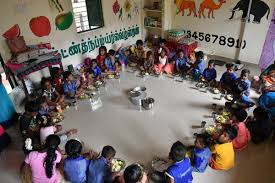
NEW DELHI — In a landmark shift for India’s public health and education landscape, the Union Ministry of Women and Child Development announced Friday that 103,940 Anganwadi Centres (AWCs) have been successfully upgraded to “Saksham” (Capable) status. This modernization, part of the Saksham Anganwadi and Poshan 2.0 initiative, signals a strategic pivot from merely providing food security to delivering integrated Early Childhood Care and Education (ECCE) and high-tech nutritional monitoring.
The announcement, made by Union Minister Smt. Annpurna Devi in the Lok Sabha on March 13, 2026, details a massive infrastructural overhaul designed to combat stunting and wasting while ensuring school readiness for millions of children aged 3–6 years.
From “Courtyard Shelters” to Smart Learning Spaces
For decades, Anganwadi centres—literally “courtyard shelters”—served primarily as distribution points for supplementary nutrition. However, the Saksham upgrade introduces a “smart” architecture to these grassroots institutions.
The upgraded centres are now equipped with:
-
Audio-Visual Tools: LED screens and Wi-Fi connectivity to support digital learning.
-
Building as Learning Aid (BaLA): Educational paintings on walls that turn the physical structure into a pedagogical tool.
-
Health Infrastructure: RO water systems and improved sanitation, with funding for toilets nearly tripling from ₹12,000 to ₹36,000 per unit.
-
Sustainability: Rainwater harvesting systems and Poshan Vatikas (kitchen gardens) to provide fresh, local produce for meals.
“The first 1,000 days of a child’s life are the most critical for brain development,” says Dr. Ananya Gupta, a Senior Pediatrician and Public Health Consultant not involved in the government report. “By integrating LED screens and play-based materials into these centres, we aren’t just feeding bodies; we are stimulating cognitive pathways that are essential for long-term health and economic productivity.”
A New Era of Pedagogy: Aadharshila and Navchetana
The transformation extends beyond bricks and mortar. The government has introduced two national frameworks to standardize early childhood development:
-
Navchetana: A framework for children aged 0–3, delivered via structured home visits by Anganwadi Workers (AWWs) to provide early stimulation.
-
Aadharshila: A play-based national curriculum for children aged 3–6, aligned with the National Education Policy (NEP) 2020.
To execute this, the Poshan Bhi Padhai Bhi (PBPB) initiative has already trained over 10.25 lakh Anganwadi Workers. This dual-focus approach ensures that the “Foundational Stage” of education begins well before a child enters Grade 1.
The Power of Co-location
A critical development in 2025 was the joint guideline to co-locate AWCs within Government Primary Schools. This ensures a “seamless transition,” reducing dropout rates between preschool and formal schooling. For centres where physical co-location is impossible, “mapping” ensures that the local school and AWC remain pedagogically linked.
Precision Monitoring: The Poshan Tracker and AI
One of the most significant technological leaps is the Poshan Tracker, a governance tool that allows for the real-time tracking of over 100 million beneficiaries.
The Ministry has leveraged technology to move away from manual registers toward:
-
Dynamic Identification: Real-time data on stunting (low height-for-age) and wasting (low weight-for-height).
-
Facial Recognition System (FRS): To ensure that “Take-Home Ration” (THR) reaches the intended recipient, reducing leakages in the system.
-
The Nominee Module: Recognizing the logistical hurdles faced by pregnant women and lactating mothers, a new module allows a registered nominee to collect rations on their behalf after a one-time e-KYC and subsequent face-matching.
| Feature | Conventional AWC | Saksham AWC |
| Learning | Informal/Unstructured | Play-based (Aadharshila Curriculum) |
| Technology | Manual Registers | Poshan Tracker & Facial Recognition |
| Water/Sanitation | Basic/Standard | RO Systems & Enhanced Toilet Grants |
| Environment | Basic Shelter | BaLA Paintings & LED Screens |
Implications for Public Health and the Tribal Population
The program places a heavy emphasis on equity. Under PM JANMAN and the Dharti Aaba Janjatiya Gram Utkarsh Abhiyan, the government is specifically targeting tribal populations and “Vibrant Villages” in northern border areas.
“The nutritional status of tribal children has historically lagged behind national averages,” notes Rajesh Varma, a policy researcher in rural development. “By bringing the Saksham model to these remote areas, we are addressing the social determinants of health—clean water, education, and nutrition—simultaneously.”
Limitations and Challenges
While the numbers are impressive, experts point to potential hurdles:
-
Digital Divide: Wi-Fi connectivity remains “wherever feasible,” which may leave the most remote centres relying on offline modes.
-
Worker Burden: Anganwadi workers, who are often underpaid and overworked, now bear the responsibility of being both health workers and educators.
-
Maintenance: Keeping RO systems and LED screens functional in rural environments requires a robust localized maintenance network that is still being scaled.
Practical Takeaways for Families
For parents and caregivers, the Saksham Anganwadi represents a free, high-quality alternative to private preschools.
-
Check Eligibility: Families with children under 6, pregnant women, and lactating mothers should ensure they are registered on the Poshan Tracker.
-
Engage with AWWs: Utilize the “Navchetana” home visits for guidance on early brain stimulation for infants.
-
Community Participation: Parents are encouraged to visit their local Saksham AWC to see the new audio-visual tools and participate in “Poshan Vatikas.”
As India strives to improve its ranking on the Global Hunger Index and educational outcomes, the success of these 103,940 centres may well be the blueprint for a healthier, more literate generation.
Reference Section
Primary Source:
-
Ministry of Women and Child Development. (2026, March 13). 1,03,940 Anganwadi Centres upgraded so far into Saksham Anganwadi Centres under Saksham Anganwadi and Poshan 2.0 scheme. Press Information Bureau (PIB), Delhi.
Medical Disclaimer: This article is for informational purposes only and should not be considered medical advice. Always consult with qualified healthcare professionals before making any health-related decisions or changes to your treatment plan. The information presented here is based on current research and expert opinions, which may evolve as new evidence emerges.