 0
0
 0
0
February 12, 2026
NEW DELHI — In a sweeping overhaul of national public health strategy, the Government of India has consolidated its primary nutritional safety nets into a singular, high-tech umbrella known as Mission Saksham Anganwadi and Poshan 2.0. The mission, which integrates Anganwadi services, the Poshan Abhiyaan, and schemes for adolescent girls, marks a fundamental shift from merely “filling stomachs” to a sophisticated, data-driven approach focused on “diet diversity” and “behavioral change.”
Announced by the Minister of State for Women and Child Development, Smt. Savitri Thakur, in the Rajya Sabha yesterday, the revamped mission targets the country’s most vulnerable: children under six, pregnant women, lactating mothers, and adolescent girls in specific regions. By leveraging real-time digital tracking and localized “Nutri-gardens,” the initiative aims to dismantle the systemic roots of stunting, wasting, and anemia.
From Calorie-Counting to Micronutrient-Density
For decades, nutritional interventions were largely measured by caloric intake. However, under the revised norms established in January 2023 and now fully operationalized under Poshan 2.0, the focus has shifted to the quality of those calories.
The new standards move away from “quantity-only” metrics to prioritize:
-
High-quality proteins and healthy fats.
-
Essential micronutrients, including Calcium, Zinc, Iron, Vitamin A, and the Vitamin B complex (B6, B12, and Folate).
-
Fortified Rice and Millets: To combat widespread anemia, fortified rice is now a staple at Anganwadi Centers (AWCs), while millets—often called “nutri-cereals”—are mandated at least once a week in Hot Cooked Meals.
“The transition to millets and fortified grains is a game-changer for pediatric health,” says Dr. Ananya Roy, a public health consultant (unaffiliated with the Ministry). “By focusing on dietary diversity rather than just bulk carbohydrates, we are addressing ‘hidden hunger’—where a child may have enough to eat but lacks the vital minerals for brain and bone development.”
The Digital Pulse: The ‘Poshan Tracker’
At the heart of this mission’s governance is the Poshan Tracker, a mobile application that provides a real-time “health map” of the nation. Unlike previous years where data was often delayed by manual reporting, the tracker allows for:
-
Dynamic Identification: Near real-time monitoring of stunting, wasting, and underweight prevalence.
-
Service Verification: Tracking daily attendance at AWCs and the distribution of Take-Home Rations (THR).
-
Accountability: Monitoring the performance of Anganwadi Workers (AWWs) across the country.
Data from the tracker over the last three years suggests a consistent downward trend in malnutrition indicators. This digital transparency was echoed in a recent 2025 impact assessment by NITI Aayog, which rated the program’s relevance and delivery as “satisfactory” in its mission to curb malnutrition.
Community-Led Healing: Poshan Vatikas and Jan Andolans
The mission acknowledges that medicine and supplements alone cannot solve malnutrition; the solution must be grown in the community.
Poshan Vatikas (Nutri-gardens) are being established at Anganwadi Centers to provide affordable, hyper-local access to fruits, vegetables, and medicinal herbs. These gardens serve as both a food source and a classroom, teaching families how to utilize local biodiversity to enhance their daily meals.
Furthermore, the mission emphasizes Jan Andolans (People’s Movements). Through “Poshan Maah” (Nutrition Month) in September and “Poshan Pakhwada” in March, the government is pushing for a behavioral shift.
“Adoption of good nutrition habits requires sustained effort for behavioral change,” the Ministry noted. Every Anganwadi worker is now required to conduct at least two Community Based Events (CBEs) monthly to educate mothers on Infant and Young Child Feeding (IYCF) norms.
Managing Severe Malnutrition: A New Protocol
Addressing the most critical cases, the Ministry of Women & Child Development and the Ministry of Health & Family Welfare have launched a joint protocol for the Management of Malnutrition in Children.
This protocol introduces a tiered system:
-
Community Management: Severely Acute Malnourished (SAM) children without medical complications are treated at home with local, nutrient-dense foods and supportive medical care.
-
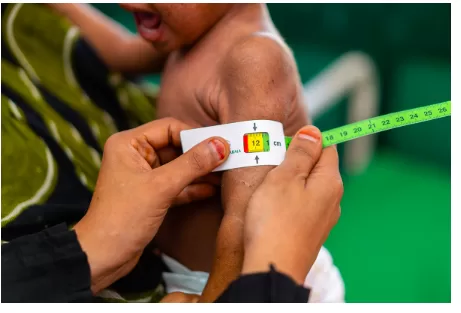
Clinical Referral: Children with medical complications are identified through rigorous screening and referred to Nutrition Rehabilitation Centers (NRCs) or hospitals.
This community-based approach prevents the healthcare system from becoming overwhelmed while ensuring that children receive culturally appropriate, sustainable nutrition at home.
Evidence of Success and Future Outlook
A World Bank survey conducted across 11 priority states highlighted the effectiveness of these “human-centric” interventions. The survey found that:
-
Over 80% of women reached by the program successfully received critical nutrition messages.
-
81% of women practiced exclusive breastfeeding for the first six months—a vital metric for reducing infant mortality.
Despite these gains, challenges remain. The “self-selecting” nature of the scheme means that reaching the most marginalized nomadic or migratory populations remains a logistical hurdle for State and UT administrations. However, with the integration of AYUSH practices (traditional Indian medicine) and a renewed focus on adolescent girls (aged 14–18) in Aspirational Districts, the mission is casting its widest net yet.
As India moves toward its goal of a “Malnutrition-Free India,” Mission Poshan 2.0 stands as a testament to the power of combining ancient dietary wisdom with 21st-century digital governance.
References
-
Ministry of Women and Child Development (2026): Official Statement on Mission Saksham Anganwadi and Poshan 2.0. Rajya Sabha Proceedings, Feb 11, 2026.
-
Poshan Tracker Statistics: https://www.poshantracker.in/statistics
Medical Disclaimer: This article is for informational purposes only and should not be considered medical advice. Always consult with qualified healthcare professionals before making any health-related decisions or changes to your treatment plan. The information presented here is based on current research and expert opinions, which may evolve as new evidence emerges.