 0
0
 0
0
January 14, 2026
BARASAT, WEST BENGAL – Health authorities in West Bengal have intensified containment efforts following official confirmation that two healthcare workers have tested positive for the Nipah virus (NiV). The patients, a male and a female nurse employed at a private hospital in Barasat, North 24 Parganas, are currently in critical condition and receiving mechanical ventilator support.
The confirmation has triggered a massive public health response, with a National Joint Outbreak Response Team (NJORT) arriving in the state to assist local authorities. The development marks a significant escalation in the region’s health security, as officials race to trace over 120 contacts to prevent a wider outbreak of the high-fatality zoonotic disease.
The Outbreak and Clinical Status
The two infected individuals had been under observation for the past 10 days before their samples, tested at the All India Institute of Medical Sciences (AIIMS) Kalyani, returned positive results.
According to state health ministry sources, the female nurse had recently traveled to her hometown in the Nadia district in mid-December, falling ill shortly after her return. Her colleague, a male nurse who worked closely with her at the Barasat facility, developed similar symptoms soon after. Both are now battling severe complications in the intensive care unit.
National and State Response
In response to the confirmed cases, Union Health Minister Jagat Prakash Nadda spoke with West Bengal Chief Minister Mamata Banerjee, pledging the full support of the Central Government. The Public Health Emergency Operations Centre (PHEOC) at the National Centre for Disease Control (NCDC) in Delhi has been activated to coordinate a multi-disciplinary strategy.
The deployed NJORT includes experts from:
-
National Institute of Virology (NIV), Pune
-
National Institute of Epidemiology (NIE), Chennai
-
AIIMS Kalyani
-
All India Institute of Health and Public Hygiene, Kolkata
-
Department of Wildlife (Ministry of Environment, Forest and Climate Change)
“The situation is being handled with the highest priority given the high mortality rate associated with Nipah,” stated a senior official from the West Bengal Health Department. “We have established a robust Standard Operating Procedure (SOP) for all hospitals to ensure strict infection control.”
Understanding the Nipah Threat
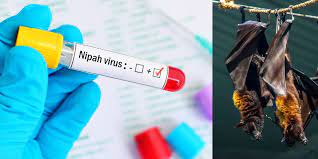
Nipah virus is a zoonotic pathogen, meaning it jumps from animals to humans. Its primary natural reservoirs are fruit bats (Pteropus genus). Transmission occurs through:
-
Direct Contact: Handling infected bats or pigs.
-
Contaminated Food: Consuming fruit or raw date palm sap contaminated with bat saliva or urine.
-
Human-to-Human: Close contact with the bodily fluids (blood, saliva, or urine) of an infected person.
“Nipah is particularly concerning because of its dual impact on the respiratory and neurological systems,” says Dr. Subarna Goswami, a senior public health specialist not involved in the current cases. “It can present initially as a flu-like illness but can rapidly progress to acute encephalitis—swelling of the brain—which leads to disorientation, seizures, and coma.”
Public Health Implications and Containment
Authorities have identified approximately 120 primary and secondary contacts. As of Wednesday, 50 of these individuals have undergone testing, and monitoring remains ongoing. The state has also launched three dedicated helpline numbers (033-23330180, 9874708858, 9836046212) to address public concerns and facilitate self-reporting.
Historically, West Bengal has faced Nipah before, notably in Siliguri (2001) and Nadia (2007). In the 2007 outbreak, the case fatality rate reached 100%. While modern supportive care has improved outcomes, the World Health Organization (WHO) notes that the fatality rate globally remains between 40% and 75%.
Expert Guidance for the Public
While the current outbreak is localized, experts urge residents in North 24 Parganas, Nadia, and Purba Bardhaman to exercise caution.
Preventive measures include:
-
Avoid Raw Sap: Do not consume raw date palm sap, a common tradition that is a known risk factor.
-
Inspect Fruit: Avoid fruits that show signs of bird or bat bites (common in lychees and guavas).
-
Hygiene: Frequent handwashing with soap and water is essential.
-
Caregiver Safety: If caring for someone with a fever, use masks and gloves and avoid contact with bodily fluids.
Potential Limitations and Challenges
A significant challenge in managing Nipah is the lack of a licensed vaccine or specific antiviral treatment. Current medical intervention is limited to intensive supportive care. Furthermore, the incubation period can range from 4 to 14 days (and in rare cases up to 45 days), meaning new cases could still emerge among the identified contacts.
“Meticulous contact tracing is our best weapon right now,” adds Dr. Goswami. “Because the symptoms are initially non-specific, there is always a risk of it being misidentified as common influenza in the early stages.”
Reference Section
- https://www.ndtv.com/health/two-healthcare-workers-test-positive-for-nipah-virus-in-west-bengal-authorities-intensify-containment-measures-10743045
Medical Disclaimer: This article is for informational purposes only and should not be considered medical advice. Always consult with qualified healthcare professionals before making any health-related decisions or changes to your treatment plan. The information presented here is based on current research and expert opinions, which may evolve as new evidence emerges.