 0
0
 0
0
NEW DELHI — In a landmark decision that highlights the complex intersection of medical advancement and public policy, the Supreme Court of India has declined a plea to mandate advanced Nucleic Acid Amplification Testing (NAT) across all blood banks in the country.
On March 13, 2026, a bench led by Chief Justice Surya Kant and Justice Joymalya Bagchi ruled that the judiciary is not the appropriate body to dictate medical protocols. Instead, the court directed petitioners to approach state health authorities and the National Blood Transfusion Council (NBTC). The decision settles—at least for now—a heated debate over whether the “Right to Life” under Article 21 of the Indian Constitution necessitates the highest possible tier of blood screening, regardless of the staggering economic costs.
The Core of the Contention: What is NAT?
To understand the weight of this ruling, one must look at the technology in question. Most blood banks in India currently use the ELISA (Enzyme-Linked Immunosorbent Assay) method to screen for Transfusion-Transmissible Infections (TTIs) such as HIV, Hepatitis B (HBV), and Hepatitis C (HCV).
While ELISA is effective, it relies on detecting antibodies or antigens that the body produces after an infection. This creates a “window period”—a stretch of time where a donor is infected and contagious, but the test returns a false negative.
-
HIV Window Period: Roughly 11–28 days with ELISA; reduced to less than 10 days with NAT.
-
The NAT Advantage: Unlike ELISA, NAT detects the actual genetic material (DNA or RNA) of the virus itself. This allows for significantly earlier detection, potentially catching infections just days after exposure.
Despite these benefits, only an estimated 2% to 7% of blood units in India currently undergo NAT, primarily in high-end private hospitals and major metropolitan centers.
Judicial Caution vs. Medical Necessity
The petition, brought forward by the Delhi-based NGO Sarvesham Mangalam Foundation, argued that mandatory NAT is essential to prevent “medical tragedies.” The foundation cited harrowing reports from 2025, including cases in Madhya Pradesh and Jharkhand where children with thalassemia allegedly contracted HIV and Hepatitis after receiving transfusions at government facilities.
However, the Supreme Court remained firm on the limits of judicial expertise. “We are definitely not experts on the subject,” Chief Justice Kant remarked during the proceedings. “Why should we pretend that we know medical science?”
The bench expressed concern over the financial burden such a mandate would place on state governments. Implementing NAT nationwide would require a massive overhaul of infrastructure, specialized equipment, and highly trained personnel—resources currently scarce in rural India.
The Thalassemia Crisis: A High-Stakes Dilemma
The ruling is a significant blow to the advocacy groups representing India’s thalassemia community. India is often referred to as the “thalassemia capital” of the world, with roughly 150,000 patients and up to 12,000 new cases diagnosed annually.
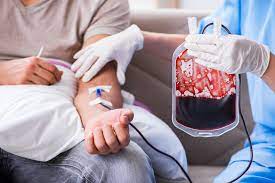
Patients with thalassemia major require blood transfusions every 15 to 20 days. Over a lifetime, a single patient may receive upwards of 700 units of blood. This cumulative exposure means that even a small statistical risk of infection becomes a near-certainty over decades of treatment.
“For these patients, safe blood isn’t a luxury; it’s a lifeline,” says Anubha Taneja Mukherjee, a prominent patient advocate. “When the system fails to provide the safest testing available, it shifts the burden of risk onto the most vulnerable citizens.”
The Economics of Blood Safety
The primary hurdle to universal NAT implementation is cost. While a standard ELISA-screened blood unit costs approximately ₹1,255 to process, adding NAT increases that cost by ₹1,200 to ₹1,450 per unit.
A socio-economic analysis cited in recent health literature suggests that the cost-effectiveness of NAT in India remains a point of contention. In regions with low viral prevalence, the “yield”—the number of infected cases caught by NAT that ELISA missed—is often low. One Rajasthan-based study estimated that a statewide NAT rollout would cost over ₹5.8 crore to catch a handful of cases, resulting in an “Incremental Cost-Effectiveness Ratio” (ICER) that far exceeds India’s Gross National Income per capita.
Comparison of Testing Standards
| Feature | ELISA (Standard) | NAT (Advanced) |
| Detection Method | Antibodies/Antigens | Viral DNA/RNA |
| Window Period (HIV) | 11–28 Days | < 10 Days |
| Approx. Add-on Cost | Included in base cost | ₹1,200 – ₹1,450 |
| Infrastructure Need | Standard Lab | Specialized High-Tech Lab |
Expert Perspectives: A Holistic Approach
Medical professionals are divided not on the efficacy of the test, but on the priority of its implementation. Dr. Sangeeta Pathak, Secretary General of the Indian Society of Blood Transfusion & Immunohematology, suggests that technology is only one part of the solution.
“Safe blood starts at the source,” Dr. Pathak notes. She emphasizes that India must move toward 100% voluntary blood donation. Currently, many hospitals rely on “replacement donors” (family or friends of the patient), who are statistically more likely to hide high-risk behaviors than altruistic, repeat voluntary donors.
Other experts, such as Prof. Rabindra Kumar Jena, argue for a stronger focus on prevention, including carrier screening for couples (costing roughly ₹500–₹800) to reduce the number of children born with transfusion-dependent conditions.
Implications for the Public
For the average consumer and health-conscious citizen, the Supreme Court’s decision means that the “gold standard” of blood testing will remain inconsistent across India.
What can you do?
-
Ask Questions: If you or a loved one requires a transfusion, ask the hospital if the blood has been “NAT-tested.”
-
Seek Accreditation: Look for blood banks accredited by the NBTC or NABH, as these facilities often adhere to higher voluntary standards.
-
Donate Voluntarily: The safest blood comes from regular, voluntary donors. By donating, you help maintain a safe and robust supply that reduces the need for emergency replacement donations.
While the Supreme Court has passed the baton to state health secretaries and the executive branch, the pressure for a “phased rollout” of NAT in high-volume blood banks is likely to continue. For now, the “Right to Safe Blood” remains a goal that India’s healthcare system is still striving to afford.
References
- https://medicaldialogues.in/news/health/hospital-diagnostics/supreme-court-declines-plea-for-mandatory-nucleic-acid-tests-in-blood-banks-166474
Medical Disclaimer: This article is for informational purposes only and should not be considered medical advice. Always consult with qualified healthcare professionals before making any health-related decisions or changes to your treatment plan. The information presented here is based on current research and expert opinions, which may evolve as new evidence emerges.