 0
0
 0
0
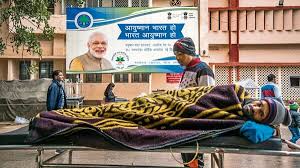
India’s flagship health schemes Ayushman Bharat and POSHAN Abhiyaan are revolutionizing public health by reducing disease burden while simultaneously building the nation’s human capital, Prime Minister Narendra Modi recently highlighted. These initiatives, launched in 2018, have become critical components not only of improving health outcomes but also of fostering economic growth and social equity.
Transformative Health Initiatives for a Developing India
Ayushman Bharat, known formally as the Pradhan Mantri Jan Arogya Yojana (PM-JAY), is now the world’s largest government-funded health insurance scheme. Covering over 55 crore economically vulnerable citizens, it provides financial protection against catastrophic health expenses and improves access to quality treatment across India’s vast landscape. As of mid-2025, the scheme has authorized nearly 10 crore hospital admissions with disbursements exceeding Rs 1.4 lakh crore, demonstrating its vast scale and social impact.
POSHAN Abhiyaan (National Nutrition Mission) targets malnutrition among pregnant women, lactating mothers, and children, focusing on the first 1,000 days of life—a critical window for growth and brain development. The campaign enhances supplementary nutrition, growth monitoring, and behavioral change communication, aiming to reduce child stunting, underweight prevalence, and anemia by measurable percentages annually. These improvements in early childhood nutrition translate into improved cognitive development and long-term productivity.
Complementing these is the Swachh Bharat Mission, a public health sanitation initiative credited with drastically reducing open defecation, thus lowering the incidence of waterborne diseases and saving an estimated 60,000 to 70,000 infant lives annually.
Expert Commentary on Health as an Economic Driver
Renowned cardiac surgeon Dr. Devi Prasad Shetty, in a recent analysis shared by the Prime Minister’s Office, underscored how these health schemes collectively serve as engines of economic growth. Dr. Shetty emphasized that India’s healthcare transformation is increasingly recognized as a cornerstone of national development, highlighting: “Ayushman Bharat, POSHAN Abhiyaan, and Swachh Bharat are reducing disease, protecting household savings, and building human capital. Seeing health as an investment, not a cost, is boosting governance and prosperity.”
Dr. Shetty also noted the shift from viewing health policy purely as welfare to considering it a strategic economic investment—a critical perspective for sustainable development. He pointed out that expanded insurance coverage reduces out-of-pocket expenditure from a historical 64% in 2013-14 to 39% in 2021-22, alleviating financial burdens on families and enabling them to allocate resources towards education, nutrition, and small businesses.
Public Health Implications and Practical Insights
The impact of these programs extends beyond individual health outcomes to broader societal benefits. Improved nutrition and sanitation increase workforce reliability and cognitive capacities, leading to a more skilled and productive population. Employer benefits include lower absenteeism and reduced staff turnover. Rural households reportedly save up to Rs 50,000 annually due to better sanitation, according to UNICEF estimates.
Healthcare access expansion via Ayushman Bharat also fosters private sector investment in underserved areas, invigorating local economies and healthcare entrepreneurship. The convergence of sanitation, nutrition, and insurance programs fosters an ecosystem of preventive care—critical in managing India’s growing burden of non-communicable diseases.
Limitations and Areas for Continued Focus
While the achievements are significant, challenges remain. Sustaining the quality of health and nutrition service delivery, ensuring equitable access across diverse geographies, and addressing malnutrition comprehensively require continuous monitoring and adaptive strategies. The success of these initiatives depends on multi-sectoral coordination and community engagement, with technology playing a key role in monitoring and outreach.
Moreover, healthcare outcomes can exhibit regional variability, influenced by socioeconomic factors and infrastructure gaps. Continued investment in frontline health workers and awareness campaigns is essential to maximize the benefits of programs like POSHAN Abhiyaan.
Looking Ahead: Health as a National Priority
India’s integrated approach to health—linking disease prevention, financial protection, nutrition, and sanitation—is setting benchmarks in public health policy. These efforts align with Sustainable Development Goals by aiming for universal health coverage and improved maternal and child health.
Prime Minister Modi’s vision for “Viksit Bharat” (Developed India) by 2047 hinges on such transformational policies. By putting health investment at the heart of economic planning, India is not just reducing immediate disease burdens but cultivating a healthier, more productive human capital base for future growth.
Medical Disclaimer
Medical Disclaimer: This article is for informational purposes only and should not be considered medical advice. Always consult with qualified healthcare professionals before making any health-related decisions or changes to your treatment plan. The information presented here is based on current research and expert opinions, which may evolve as new evidence emerges.
References
- https://www.pmindia.gov.in/hi/news_updates/%E0%A4%AA%E0%A5%8D%E0%A4%B0%E0%A4%A7%E0%A4%BE%E0%A4%A8%E0%A4%AE%E0%A4%82%E0%A4%A4%E0%A5%8D%E0%A4%B0%E0%A5%80-%E0%A4%A8%E0%A5%87-%E0%A4%B8%E0%A4%BE%E0%A4%B0%E0%A5%8D%E0%A4%B5%E0%A4%9C%E0%A4%A8-3/?comment=disable
- https://ddnews.gov.in/prime-minister-narendra-modi-highlighted-the-impact-of-key-schemes-aimed-at-improving-public-health-and-strengthening-the-economy/