 0
0
 0
0
Amaravati, Andhra Pradesh – Health officials in Andhra Pradesh have issued a statewide alert following reports of nine suspected deaths attributed to scrub typhus, a mite-borne bacterial infection. The outbreak has prompted the deployment of Rapid Response Teams (RRTs) across all 26 districts as the number of positive cases surges past 1,500, raising concerns about the spread of the disease beyond its traditional rural strongholds.
The Developing Crisis
The Commissioner of the Medical, Health and Family Welfare Department, G. Veerapandian, confirmed on Monday that while over 1,500 cases have been detected this year, the nine reported fatalities remain under investigation. “No death has yet been officially confirmed due to scrub typhus,” Veerapandian stated during a press conference in Amaravati. “Genome sequencing is currently underway at facilities in Guntur and Tirupati to determine the exact cause of death.”
Preliminary reports indicate a worrying pattern of mortality in districts such as Palnadu, Bapatla, Krishna, SPSR Nellore, and Prakasam. Notably, the outbreak has revealed a perplexingly high case fatality rate in areas with fewer reported infections, while districts like Chittoor—which has recorded the highest caseload with over 400 infections—have reported zero fatalities to date.
Understanding the “Bush Typhus” Threat
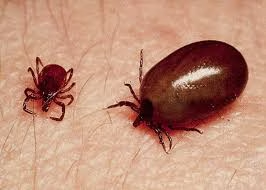
Scrub typhus, colloquially known as “bush typhus,” is a zoonotic disease caused by the bacterium Orientia tsutsugamushi. It is transmitted to humans through the bite of infected chiggers (larval mites). These microscopic mites typically thrive in dense scrub vegetation, forests, and grassy areas, making agricultural workers and rural inhabitants particularly vulnerable.
However, recent data suggests a shift in the disease’s ecology, with cases emerging in urban and peri-urban areas like Visakhapatnam, potentially indicating changing vector patterns.
Symptoms and The Critical “Eschar”
Dr. Ramana Yasaswi, Superintendent of the Government General Hospital (GGH) in Guntur, highlighted the importance of early clinical recognition. “An insect bite usually forms a black scab on the skin, known as an ‘eschar.’ This is a hallmark sign,” Dr. Yasaswi explained.
Clinical presentation typically includes:
-
Sudden onset of high fever and chills
-
Severe headache and body aches
-
Dry cough
-
Enlarged lymph nodes
-
Mental changes ranging from confusion to coma in severe cases
Without timely treatment, the infection can escalate to dangerous complications, including pneumonitis, acute respiratory distress syndrome (ARDS), and multi-organ dysfunction syndrome (MODS).
Diagnosis and Treatment Challenges
The current standard for diagnosis involves the Enzyme-Linked Immunosorbent Assay (ELISA), which detects antibodies against the bacteria. While effective, antibodies may take days to develop, creating a window where diagnosis relies heavily on clinical suspicion.
Officials attribute the rise in reported cases partly to expanded testing capabilities at Primary Health Centres (PHCs). To combat the outbreak, the state government has stockpiled over 10 million tablets of Doxycycline and Azithromycin—the primary antibiotics used to treat the infection.
“The key is early intervention,” noted a senior infectious disease specialist at AIIMS Mangalagiri. “Doxycycline is highly effective if administered within the first few days of symptom onset. The fatalities we are seeing often involve patients with co-morbidities or those who sought medical care late, when multi-organ failure had already set in.”
Public Health Response
The state health department has launched a multi-pronged containment strategy:
-
Surveillance: RRTs are conducting epidemiological investigations in affected clusters to trace the source of infection.
-
Sanitation: Local bodies have been instructed to clear shrubbery and improve sanitation in residential areas to destroy mite habitats.
-
Awareness: Campaigns are active in rural and tribal belts to educate farmers on preventive measures.
Despite the surge, officials urged the public not to panic, noting that Andhra Pradesh’s case numbers are still comparatively lower than neighboring Tamil Nadu and Karnataka, which have reported significantly higher burdens of the disease this year.
Practical Implications for the Public
Health experts advise residents, especially those in agricultural or vegetation-dense areas, to take specific precautions:
-
Protective Clothing: Wear long-sleeved shirts and trousers when working outdoors.
-
Hygiene: Take a bath and scrub the body thoroughly after visiting potential mite habitats.
-
Environment: Keep residential surroundings free of rodents and overgrown grass, as rodents often carry the mites.
-
Vigilance: Seek immediate medical attention if a fever persists for more than two days, especially if accompanied by a rash or a black scab.
Limitations and Future Outlook
It is important to note that the nine deaths are currently classified as “suspected.” Definitive confirmation requires genome sequencing to rule out other causes such as dengue or leptospirosis, which often co-circulate during the post-monsoon season. The results of these sequencing tests are expected to provide clarity on the strain virulence and guide future treatment protocols.
As the state grapples with this biological challenge, the collaboration between public health officials, medical professionals, and an informed public will be decisive in curbing the spread of this neglected tropical disease.
Medical Disclaimer:
This article is for informational purposes only and should not be considered medical advice. Always consult with qualified healthcare professionals before making any health-related decisions or changes to your treatment plan. The information presented here is based on current research and expert opinions, which may evolve as new evidence emerges.
References:
-
Press Trust of India (PTI). (2025, December 8). Andhra reports nine suspected Scrub Typhus deaths. The Week. Retrieved from https://www.theweek.in