 0
0
 0
0
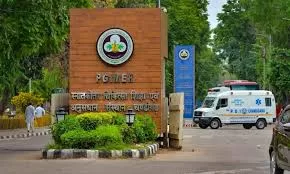
New Delhi — In a significant development underscoring the ongoing governance crisis at India’s leading medical institutions, faculties of the All India Institute of Medical Sciences (AIIMS), New Delhi, and the Postgraduate Institute of Medical Education and Research (PGIMER), Chandigarh, staged a peaceful “Dandi March” protest on October 1, 2025. The demonstration spotlighted the government’s prolonged delay in implementing a rotatory headship policy, a long-pending governance reform designed to ensure democratic, transparent, and time-bound leadership rotation in these premier institutes.
The march commenced at AIIMS at around 5 p.m. and proceeded toward the Prime Minister’s Office in a symbolic appeal urging urgent government action on the matter. This protest builds on a sustained two-year faculty campaign involving prior hunger strikes, black ribbon protests, marches, and demonstrations that have yet to yield the promised policy enforcement.
Understanding the Rotatory Headship Policy
The rotatory headship system proposes a fixed-term rotation of department head positions among senior faculty members based on objective criteria such as seniority and academic performance. This reform aims to decentralize power, promote fairness and transparency, and democratize institutional governance. Similar models exist globally in reputed institutions such as Harvard, Oxford, IITs, IIMs, JIPMER, and NIMHANS, where they have contributed to equitable leadership opportunities and reduced institutional stagnation.
Background and Faculty Concerns
The Ministry of Health and Family Welfare (MoHFW) formally approved the rotatory headship policy in July 2023, with a directive to implement it by June 2024. However, despite this directive, AIIMS and PGIMER faculties report that no concrete action has been taken. Faculty associations at both institutions unanimously adopted demands for its immediate enforcement and collegium-based leadership systems to oversee the transition.
Faculty have expressed considerable frustration over the prolonged delays, citing lack of transparency and ongoing inaction from the government. Importantly, the Faculty Association of AIIMS (FAIMS) and Faculty Association of PGIMER (FA-PGIMER) emphasize that their demand is not for personal gain but rather for institutional fairness and democratic governance. They have urged Prime Minister Narendra Modi and Union Health Minister J.P. Nadda, who also serves as AIIMS’s president, to intervene urgently.
Expert Commentary and Survey Insights
The VK Paul committee, appointed by the government, surveyed faculty opinions regarding rotatory headship. Their 2023 report revealed mixed perspectives among department heads, with approximately 76% opposed and 16% in favor of the policy, signaling dissent at the leadership level. However, support among professors at large was robust, with 82% of professors, 89% of additional professors, 78% of associate professors, and 95% of assistant professors backing the reform. The committee underscored the policy’s potential to foster academic equity and reduce stagnation in leadership roles.
The Indian Medical Association (IMA) and Delhi Medical Association (DMA) have officially supported the faculty’s demands, recognizing rotatory headship as a well-established governance reform. They highlight successful implementation of similar systems in premier national institutions and advocate for prompt government action to uphold academic transparency, equity, and democratic leadership practices in healthcare education.
Implications for Public Health and Medical Education
Transparent and fair governance in medical institutions is crucial for the advancement of healthcare education, research quality, and ultimately patient care outcomes. Prolonged leadership stagnation can hamper innovation, slow decision-making, and affect institutional morale, potentially impacting the quality of medical services and research output that extend benefits to the general public. By implementing rotatory headship, AIIMS and PGIMER could set a precedent for governance reforms that promote accountability and inclusiveness in India’s top healthcare education centers.
Challenges and Counterarguments
The opposition from a significant proportion of department heads signals concerns regarding the policy’s practicality or acceptance within the highest echelons of leadership. Some faculty fear that frequent changes might disrupt continuity or strategic vision. Hence, the government’s ongoing deliberations include exploring collegium-based systems or alternative models that balance rotation with stability.
Conclusion
The ongoing faculty protest march at AIIMS and PGIMER highlights a pressing need for reform in institutional governance. The rotatory headship policy’s delayed implementation risks undermining democratic principles within India’s premier medical establishments. Continued dialogue among stakeholders, transparent policy enforcement, and consideration of diverse perspectives are essential to resolving this issue. For health-conscious consumers and healthcare professionals alike, these governance reforms have meaningful implications on the quality and accountability of medical education and, by extension, patient care.
Medical Disclaimer: This article is for informational purposes only and should not be considered medical advice. Always consult with qualified healthcare professionals before making any health-related decisions or changes to your treatment plan. The information presented here is based on current research and expert opinions, which may evolve as new evidence emerges.
References
-
“AIIMS, PGIMER faculty to stage Dandi March over Rotatory Headship delay” Medical Dialogues, Sept 30, 2025. https://medicaldialogues.in/news/health/hospital-diagnostics/aiims-pgimer-faculty-to-stage-dandi-march-over-rotatory-headship-delay-156178