 0
0
 0
0
August 15, 2025 – Sadarpur, HP:
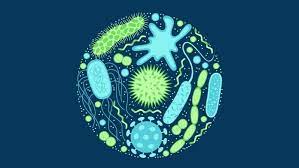
In a groundbreaking advance against the global threat of antibiotic-resistant bacteria, scientists at the Massachusetts Institute of Technology have harnessed artificial intelligence (AI) to design two novel drugs capable of combating stubborn superbugs, including drug-resistant gonorrhoea and MRSA. This innovation brings hope for a new era in the fight against antimicrobial resistance, which claims more than a million lives each year.
Pushing the Boundaries of Chemical Creativity
Rather than relying on traditional chemical libraries, the MIT research team programmed generative AI algorithms to analyze over 36 million molecular possibilities. Their goal: to build antibiotics atom-by-atom, intentionally avoiding any resemblance to existing drugs—thereby outsmarting resistant bacteria. One approach pieced together fragments of molecules, while another granted complete creative freedom, enabling the discovery of molecules entirely unknown to science.
Lead author Dr. Aarti Krishnan explained, “We wanted to get rid of anything that would look like an existing antibiotic, to help address the antimicrobial resistance crisis in a fundamentally different way.”
After a rigorous selection process, two star compounds emerged: NG1, targeting gonorrhoea, and DN1, effective against MRSA. Both work by disrupting bacterial cell membranes through mechanisms not previously seen in antibiotics.
From Lab to Animal Trials—and the Road Ahead
Experiments showed NG1 slashed bacterial counts in mice infected with gonorrhoea, while DN1 wiped out MRSA in skin infections. Experts lauded the breakthrough. Dr. Andrew Edwards of Imperial College London called it “very significant,” but warned that years of refinement and testing are necessary before human trials begin. Manufacturing challenges also loom, with only a fraction of theoretical drug designs proving viable in real-world production.
Professor Chris Dowson of Warwick University added, “The more effective these drugs, the less we want to use them—to protect their potency.”
A Second Golden Age of Antibiotics?
With AI’s ability to sift through astronomical chemical possibilities and propose effective new medicines, researchers are optimistic. Professor James Collins, who led the team, remarked, “AI can enable us to come up with molecules, cheaply and quickly, and really give us a leg up in the battle against superbugs.”
Disclaimer: This article covers preclinical scientific developments. The antibiotics mentioned are not yet available or approved for human use. Always consult qualified healthcare professionals for medical advice.