 0
0
 0
0
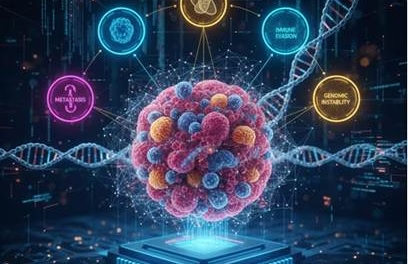
Berlin, June 7, 2025 — In a significant leap for cancer diagnostics, researchers at Charité—Universitätsmedizin Berlin have developed an artificial intelligence (AI) model capable of identifying more than 170 types of cancer with remarkable accuracy. The findings, published in Nature Cancer, showcase the promise of AI-driven diagnostics in revolutionizing personalized cancer treatment and reducing the need for invasive procedures.
From Risky Biopsies to Non-Invasive Precision
Diagnosing certain tumors, especially those in sensitive locations like the brain, often requires high-risk biopsies. However, the new AI model—named crossNN—can analyze the unique “epigenetic fingerprint” of tumor DNA, which can sometimes be obtained from easily accessible body fluids such as cerebrospinal fluid. This approach eliminates the need for surgery in many cases, offering a safer alternative for patients.
How crossNN Works
Every tumor possesses a distinct pattern of epigenetic modifications—chemical changes that regulate gene activity. By comparing these complex patterns to thousands of known cancer profiles, crossNN uses machine learning to classify tumors with exceptional precision. The model was trained on a vast dataset and tested on over 5,000 tumor samples.
-
Accuracy for brain tumors: 99.1%
-
Accuracy across 170+ cancer types: 97.8%
These results surpass the performance of previous AI-based diagnostic tools.
Explainable and Versatile
One of the standout features of crossNN is its transparency. Unlike some “black box” AI systems, crossNN’s decision-making process is fully explainable, a critical requirement for clinical approval. The model can analyze DNA from both tissue samples and body fluids, making it highly adaptable.
In a real-world case, the team successfully diagnosed a patient with a central nervous system lymphoma using only a cerebrospinal fluid sample, allowing for rapid and targeted treatment without surgery.
Next Steps: Clinical Trials and Routine Care
The research team, in collaboration with the German Cancer Consortium (DKTK), plans to launch clinical trials of crossNN at eight locations across Germany. They are also exploring its use during surgeries and hope to integrate this precise, cost-effective diagnostic approach into routine cancer care.
Expert Perspectives
“Precise diagnosis at a certified tumor center is the way forward for successful treatment,” said Prof. Martin E. Kreis, Chief Medical Officer at Charité. Dr. Philipp Euskirchen, who led the study, emphasized the model’s ability to differentiate between tumors based on their unique epigenetic profiles, even when only partial genetic data is available.
Looking Ahead
If widely adopted, crossNN could transform cancer diagnostics, enabling earlier, safer, and more personalized treatments for patients worldwide.
Disclaimer:
This article summarizes findings from a recent study published in Nature Cancer and reported by Medical Xpress. The AI model described is currently undergoing clinical trials and is not yet a standard diagnostic tool. Patients should consult their healthcare providers for personalized medical advice and should not make health decisions based solely on this news report.