 0
0
 0
0
Published: December 17, 2025
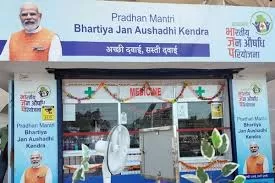
NEW DELHI — In a significant move aimed at curbing rising out-of-pocket healthcare expenditures for millions of Indian households, the Union Government has announced an ambitious target to expand the network of Pradhan Mantri Bhartiya Janaushadhi Pariyojana (PMBJP) centers. The Ministry of Chemicals and Fertilizers confirmed on Tuesday that it aims to increase the number of Jan Aushadhi Kendras (JAKs) to 25,000 by March 2027.
This announcement, made by Union Minister of State Smt. Anupriya Patel in a written reply to the Rajya Sabha, underscores a continued aggressive expansion strategy for the scheme. As of November 30, 2025, the country currently hosts 17,610 functional centers—a massive leap from a mere 80 outlets in 2014.
The Scale of Expansion
The Pradhan Mantri Bhartiya Janaushadhi Pariyojana was launched with a singular mission: to make quality generic medicines available at affordable prices to all, particularly the poor and disadvantaged. The latest data suggests a robust acceleration in this mission.
According to the official release, the pace of opening new JAKs has gained significant momentum. In the last financial year alone, the scheme recorded:
-
A 37% increase in the number of operational JAKs.
-
A 38% increase in the Maximum Retail Price (MRP) value of sales.
This correlation between store count and sales volume indicates that the expansion is not merely infrastructural but is being met with genuine consumer demand.
“The data reflects a shifting paradigm in Indian healthcare consumption,” says Dr. Rajesh Gupta, a public health policy analyst based in New Delhi. “For decades, there was a stigma that ‘cheaper’ meant ‘lower quality.’ The rising sales volume suggests that confidence in generic formulations is finally taking root among the middle and lower-income demographics.”
Understanding Generic vs. Branded Medicines
For the average consumer, the distinction between a branded drug and a generic one available at a Jan Aushadhi Kendra is often a source of confusion.
Technically, a generic drug is identical to a brand-name drug in intended use, dosage, safety, strength, and quality. The primary difference is the cost. Branded drugs include the cost of research, development, and marketing in their pricing. Generic drugs, manufactured after the patent of the original drug expires, do not carry these overheads, allowing them to be sold at 50% to 90% less than their branded counterparts.
“The molecule is the same. The efficacy is the same,” explains Dr. Aruna Desai, a senior pharmacologist. “If a patient needs Atorvastatin for cholesterol, the generic version sold at a JAK works exactly the same way within the body as the expensive branded version. Expanding access to these drugs is the single most effective way to manage chronic diseases like diabetes and hypertension on a national scale.”
Viability for Entrepreneurs
A critical component of the government’s strategy is the reliance on a franchise-like model. JAKs are not government-run stores in the traditional sense; they are opened by individual entrepreneurs, NGOs, societies, and private firms.
The government’s recent statement highlighted that the “growing basket of Janaushadhi products” has improved the commercial viability of these stores. In the past, store owners struggled with low margins and limited inventory. With a wider range of medicines and surgical items now available, the economic model has become more attractive for small business owners, ensuring that these stores can remain open and profitable in the long run.
Applications are currently being invited online for entrepreneurs across all states, including Andhra Pradesh, to bridge the gap between the current 17,610 stores and the 2027 target.
Implications for Public Health
The push for 25,000 stores has profound implications for India’s public health landscape. India has historically had one of the highest rates of Out-of-Pocket Expenditure (OOPE) on health in the world. A significant portion of this expenditure—often estimated between 60% to 70%—is spent solely on purchasing medicines.
By ensuring that a JAK is available within reach of more citizens, the government effectively creates a safety net. For a family managing a chronic condition like kidney disease or cancer, switching to generics can result in savings of thousands of rupees per month, preventing the financial catastrophe that often accompanies illness in India.
Challenges and Limitations
Despite the optimistic targets, experts urge a balanced view of the challenges ahead. Quantity does not always equal quality of service.
1. Supply Chain Logistics:
“Opening 25,000 stores is the easy part. Keeping them stocked is the challenge,” warns Dr. Gupta. “Historically, JAKs have faced intermittent stockouts of essential medicines. As the network expands, the supply chain logistics must be modernized to ensure that a patient walking in for insulin or cardiac medication doesn’t leave empty-handed.”
2. Doctor Prescriptions:
A behavioral hurdle remains within the medical community. While regulations encourage doctors to prescribe generic names, many practitioners continue to prescribe specific brands due to habit or pharmaceutical industry influence. Without the cooperation of prescribing doctors, the reach of these stores remains limited to patients who are knowledgeable enough to ask for substitutions.
3. Quality Perception:
While regulatory bodies ensure standards, the government must maintain rigorous quality control testing on the generic drugs procured. Any isolated incident of sub-standard quality could severely damage the hard-earned public trust in the Janaushadhi brand.
What This Means For You
For the consumer, this expansion promises greater accessibility.
-
Availability: With the target of 25,000 stores, the likelihood of finding a store in semi-urban and rural areas increases significantly.
-
Cost Savings: Consumers are encouraged to check the prices of their current medications against the PMBJP list.
-
Actionable Step: Patients should feel empowered to ask their doctors if a generic equivalent is suitable for their condition and locate their nearest center via the
janaushadhi.gov.inwebsite.
Conclusion
The target of 25,000 Jan Aushadhi Kendras by March 2027 is a bold statement of intent. It moves India closer to the ideal of Universal Health Coverage, where financial hardship does not dictate health outcomes. However, the success of this initiative will depend not just on the number of bricks-and-mortar stores opened, but on the consistency of the supply chain and the continued building of trust in generic medicines.
Medical Disclaimer
This article is for informational purposes only and should not be considered medical advice. Always consult with qualified healthcare professionals before making any health-related decisions or changes to your treatment plan. The information presented here is based on current research and expert opinions, which may evolve as new evidence emerges.
References
-
Primary Source: Press Information Bureau (PIB), Government of India. “Target set to increase the number of Jan Aushadhi Kendras to 25,000 by March 2027.” Ministry of Chemicals and Fertilizers. Posted 16 DEC 2025.