 0
0
 0
0
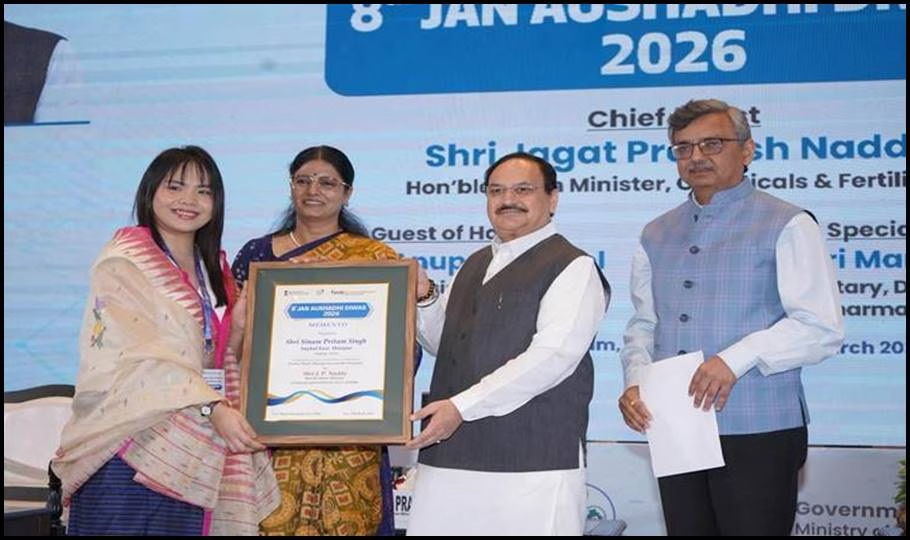
NEW DELHI – In a significant milestone for public health accessibility, India celebrated the 8th Janaushadhi Diwas today, marking the culmination of a week-long nationwide campaign to promote high-quality, low-cost generic medicines. During the flagship event at Bharat Mandapam, Union Minister for Chemicals and Fertilizers, Shri Jagat Prakash Nadda, reaffirmed the government’s ambitious vision to expand the Pradhan Mantri Bhartiya Janaushadhi Pariyojana (PMBJP) network to 25,000 Kendras (centers) by 2027, ensuring that essential healthcare remains a right, not a financial privilege.
The celebration, organized by the Pharmaceuticals & Medical Devices Bureau of India (PMBI), follows “Janaushadhi Saptah 2026,” a week of intensive outreach including 250 health check-up camps and nationwide Pad Yatras (awareness marches). The initiative highlights a shifting paradigm in Indian healthcare: the transition from brand-name dependency to evidence-based generic confidence.
Recognition of Excellence in Healthcare Delivery
The highlight of the ceremony was the presentation of awards to 13 outstanding Janaushadhi Kendra owners from diverse regions, including Tamil Nadu, West Bengal, and Delhi. These operators were recognized not just for sales volume, but for “efficient service delivery and commitment to spreading awareness,” according to official statements.
“The Janaushadhi initiative has evolved into an Andolan—a true people’s movement,” Minister Nadda told the gathering of healthcare professionals and beneficiaries. He emphasized that the program is built on a triad of quality, supply chain efficiency, and operator sustainability.
Breaking the “Cheap Means Poor Quality” Myth
For many consumers, the primary barrier to adopting generic medicines is the misconception that lower cost equates to lower efficacy. Generic medicines are pharmaceutical equivalents to brand-name drugs, containing the same active ingredients, dosage, and strength.
To address these concerns, Shri Nadda underscored the government’s focus on:
-
Strict Quality Standards: Ensuring every batch of medicine undergoes rigorous testing at NABL-accredited labs.
-
Supply Chain Robustness: Shri Manoj Joshi, Secretary of the Department of Pharmaceuticals, noted that as the network nears 20,000 locations, “consistency in branding, labeling, and supply chain efficiency” is paramount to maintaining public trust.
“Generic drugs can cost 50% to 90% less than their branded counterparts,” says Dr. Aranya Sen, a public health policy expert (not involved in the government program). “When a government backs the quality assurance of these drugs, it removes the ‘risk’ factor for the patient, which is the single biggest hurdle in chronic disease management.”
Empowering Women through “Pharma-preneurship”
A standout statistic from this year’s report is the role of the scheme in gender-inclusive economic growth. Of the 18,000+ currently operational Kendras, more than 8,000 are operated by women entrepreneurs.
Smt. Anupriya Patel, Union Minister of State for Chemicals and Fertilizers, highlighted that the Pariyojana has become a dual-purpose tool: providing affordable medicine while creating sustainable livelihoods for women in the pharmaceutical sector.
| Feature | Impact of PMBJP Scheme |
| Cost Savings | 50% to 90% cheaper than branded drugs |
| Reach | Targeted 25,000 centers by 2027 |
| Women Empowerment | 8,000+ centers operated by women |
| Accessibility | ‘Janaushadhi Sugam’ app for real-time location |
Public Health Implications: The Burden of Out-of-Pocket Expenditure
In India, “out-of-pocket” expenditure accounts for a significant portion of healthcare spending, often pushing families into debt. Chronic conditions like hypertension, diabetes, and cardiovascular diseases require lifelong medication.
By providing quality generics, the PMBJP aims to reduce this financial strain. During the Janaushadhi Saptah (March 1–7), free diagnostic services and consultations were provided to thousands, illustrating how these centers are transitioning from mere “pharmacies” to “community healthcare access points.”
The Digital Bridge: Janaushadhi Sugam
To simplify the transition for tech-savvy consumers, the ‘Janaushadhi Sugam’ mobile application has been updated. The app allows users to:
-
Locate the nearest Kendra via GPS.
-
Compare the prices of branded medicines vs. Janaushadhi generics.
-
Check the availability of specific stocks in real-time.
Challenges and The Road Ahead
While the expansion to 25,000 centers is ambitious, experts suggest that maintaining a “seamless supply chain” is the most critical hurdle. Independent pharmacists have occasionally noted stock-outs of specific high-demand medications in rural areas.
Furthermore, medical professionals emphasize that while generics are effective, the transition should be supported by physician counseling. “The transition from a branded drug to a generic should ideally be discussed with a healthcare provider to ensure the patient feels confident in the switch,” adds Dr. Sen.
As the government eyes the vision of Viksit Bharat (Developed India) by 2047, the Janaushadhi scheme stands as a cornerstone of the “Health for All” philosophy. By focusing on the three pillars of Quality, Accessibility, and Affordability, the program aims to ensure that no citizen is deprived of life-saving treatment due to the weight of a price tag.
References
-
Government Source: Press Information Bureau (PIB) Delhi, “8th Janaushadhi Diwas Celebrated Across the Country,” Posted 07 March 2026.
Medical Disclaimer: This article is for informational purposes only and should not be considered medical advice. Always consult with qualified healthcare professionals before making any health-related decisions or changes to your treatment plan. The information presented here is based on current research and expert opinions, which may evolve as new evidence emerges.