 0
0
 0
0
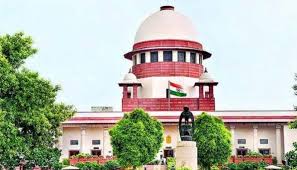
NEW DELHI — The Supreme Court of India has reserved its judgment on a legal question that could fundamentally reshape the relationship between patients, physicians, and their families. At the heart of the matter is whether a consumer complaint alleging medical negligence can survive the death of the accused doctor, allowing legal heirs to be substituted as parties to the suit.
The bench, comprising Justices J.K. Maheshwari and Atul S. Chandurkar, is currently weighing the balance between a patient’s right to compensation and the protection of a deceased professional’s estate. The verdict in Kumud Lall v. Suresh Chandra Roy (Dead) Through Legal Representatives & Ors. will determine if the “cause of action” in medical disputes is a personal grievance that dies with the individual or a professional liability that persists against their assets.
A Decade of Litigation: The Case of Kumud Lall
The dispute originated from a surgery performed by the late Dr. Suresh Chandra Roy, which the patient, Kumud Lall, alleged resulted in the permanent loss of vision in one eye. While the District Consumer Disputes Redressal Forum initially found a “deficiency in service” and awarded compensation, the State Commission later overturned that decision.
The legal battle has outlived both primary parties. As the case moved through the National Consumer Disputes Redressal Commission (NCDRC), Dr. Roy passed away, followed by Ms. Lall. Now, Lall’s legal heirs are petitioning the Supreme Court to revive the claim against Dr. Roy’s estate.
On January 13, 2026, the Court noted the critical transition from the Consumer Protection Act of 1986 to the more robust 2019 Act, which explicitly expands the definition of “consumer” to include legal heirs.
The Core Conflict: Professional Skill vs. Financial Liability
The legal debate hinges on Section 306 of the Indian Succession Act, 1925. Generally, this law allows rights and demands to survive a person’s death—with the notable exception of personal “torts” (civil wrongs) that do not cause death, such as defamation.
The Arguments for Survival
Amicus Curiae Senior Advocate Raghenth Basant argued before the Court that medical services should be treated like any other professional service under the Consumer Protection Act.
“Whether it is a painter or a doctor… this Act treats them all as service availed,” Basant stated.
The argument posits that if a professional fails to deliver the promised standard of care, the liability is attached to the “service provider’s” estate, ensuring that victims are not left without recourse simply because of a timeline of mortality.
The Arguments Against
Conversely, the bench raised a poignant question: Can a family member with no medical training be expected to defend a clinical decision made years ago? Justice Maheshwari observed, “The [legal representatives] today are substituted… The wife and the son who have been substituted have no medical knowledge.”
Critics argue that since medical negligence involves a highly specific, personal professional judgment, it is unfair to force heirs to litigate technical clinical details they cannot possibly verify.
Rising Stakes in the Indian Healthcare Landscape
This case arrives at a time of unprecedented scrutiny for the Indian medical community. Data from 2025 indicates that over 65,000 medical negligence cases were filed across various courts and consumer forums in India.
While medical disputes comprise only about 2.2% of the total 500,000 pending cases in consumer forums, the complexity of these cases is increasing. Modern litigation now relies heavily on:
-
Digital footprints: Electronic Medical Records (EMR) and audit trails.
-
Visual evidence: CCTV footage from operating theaters and recovery wards.
-
Documentation: A shift from purely clinical errors to “documentation lapses” as a primary ground for awarding compensation.
Expert Perspectives: A Divided Community
The medical fraternity views the possibility of posthumous claims with significant concern. Dr. Jayakrishnan, a medico-legal consultant not involved in the case, notes that while holding an estate liable ensures accountability, it could create a “chilling effect.”
“If heirs can be targeted, it adds a layer of posthumous anxiety for aging practitioners,” Jayakrishnan said. “However, from a consumer standpoint, an exemption would essentially grant a ‘death pardon’ for negligence, which is difficult to justify when a patient has suffered life-altering injuries.”
The Indian Medical Association (IMA) has consistently advocated for distinguishing civil negligence from criminal acts. While they celebrated recent legislative tweaks in the Bharatiya Nyaya Sanhita that capped negligence-related imprisonment, the civil liability—and the potential for “frivolous” claims—remains a major point of contention.
What This Means for Patients and Doctors
Regardless of the Supreme Court’s final ruling, the case highlights several practical shifts in Indian healthcare:
-
Indemnity Insurance: There is an increasing push for doctors to carry robust professional indemnity insurance that specifically covers “run-off” periods (coverage that continues after retirement or death).
-
Rigorous Documentation: With over 1.35 lakh consumer cases disposed of in 2025, the system is moving faster. Doctors are being advised that “if it isn’t documented, it didn’t happen.”
-
Heir Rights: For patients, the 2019 Act provides clearer pathways for heirs to pursue justice, particularly in cases involving faulty implants or long-term product liability.
Looking Ahead
The Supreme Court’s decision, reserved as of February 3, 2026, will likely set a landmark precedent. If the Court rules that negligence claims survive, it will reinforce the “Product Liability” and “Deficiency in Service” aspects of the 2019 Act. If it rules otherwise, it may provide a shield for the families of deceased professionals, but potentially at the cost of consumer equity.
As the legal landscape evolves, the medical community and the public alike await a verdict that seeks to balance the “hands that heal” with the “rights of those they treat.”
Medical Disclaimer: This article is for informational purposes only and should not be considered medical advice. Always consult with qualified healthcare professionals before making any health-related decisions or changes to your treatment plan. The information presented here is based on current research and expert opinions, which may evolve as new evidence emerges.
References
https://medicaldialogues.in/news/health/doctors/can-medical-negligence-case-against-deceased-doctor-continue-supreme-court-to-examine-164755