 0
0
 0
0
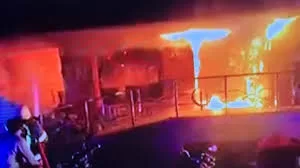
BHUBANESWAR — In the wake of a devastating fire that claimed ten lives at the SCB Medical College and Hospital in Cuttack, the Odisha government has officially transitioned from immediate crisis management to a formal pursuit of accountability. On Monday, the state’s Home Department announced the constitution of a high-level, single-member Judicial Commission of Inquiry to investigate the systemic failures that turned a life-saving Trauma Care Intensive Care Unit (ICU) into a site of tragedy.
The incident, which occurred in the early hours of Monday morning, has sent shockwaves through the healthcare community, raising urgent questions about fire safety protocols in high-dependency medical environments.
The Investigation: Seeking Answers in the Aftermath
The state government has appointed Laxmidhar Biswal, a retired District Judge, to lead the commission under the Commissions of Inquiry Act, 1952. The mandate is clear: the commission must submit a comprehensive report within 60 days.
According to the official notification, the inquiry will focus on four critical pillars:
-
The Timeline: Reconstructing the exact sequence of events between 2:00 AM and 3:00 AM when the blaze began.
-
Accountability: Identifying specific lapses in conduct by hospital staff or administrative authorities.
-
Preparedness: Evaluating the functionality of fire alarms, sprinklers, and evacuation routes at the time of the incident.
-
Future Prevention: Drafting a roadmap of recommendations to ensure such a disaster never recurs in a state-run facility.
“The State Government is deeply concerned. This is a matter of serious public importance that demands a transparent, judicial-grade investigation,” the notification stated.
The Incident: A Race Against Smoke and Time
The fire reportedly originated from a suspected electrical short circuit within the Trauma Care ICU. In the highly pressurized environment of an ICU—where oxygen levels are often elevated and patients are frequently tethered to life-support machinery—even a small spark can lead to a catastrophic flash fire.
Reports indicate that seven patients died almost immediately due to smoke inhalation and burn injuries. Three others, who were successfully moved to secondary ICUs, succumbed to their injuries shortly after. Several other patients remain in critical condition, battling both their original ailments and the trauma of the fire.
Chief Minister Mohan Charan Majhi has assured the public of “stringent action” against any party found negligent. To supplement the judicial probe, a six-member fact-finding team led by Development Commissioner Deoranjan Kumar Singh has also been activated to provide technical expertise on the hospital’s infrastructure.
Expert Perspective: The Vulnerability of the ICU
Medical safety experts note that ICUs are uniquely high-risk zones for fires. “An ICU is a ‘perfect storm’ for fire hazards,” says Dr. Arpan Das, a critical care specialist not involved in the SCB incident. “You have a high concentration of oxygen, which acts as an accelerant, a dense network of electrical equipment like ventilators and monitors, and patients who are often sedated or immobile, making rapid evacuation incredibly difficult.”
National data from the National Crime Records Bureau (NCRB) suggests that electrical short circuits account for nearly 75% of hospital fires in India. Experts argue that while “short circuit” is often cited as the cause, the underlying issue is frequently “overloading”—where aging electrical grids in older hospitals cannot keep up with the power demands of modern, 24/7 medical technology.
Public Health Implications: Beyond the Statistics
This tragedy highlights a recurring vulnerability in public healthcare infrastructure. For the general public, the SCB fire serves as a grim reminder that hospital safety is as vital as medical expertise.
Key Safety Indicators for Patients and Families:
While the government conducts its probe, health advocates suggest that patients and their families should be aware of basic safety indicators when entering a facility:
-
Visible Fire Signage: Clear maps for emergency exits.
-
Accessible Extinguishers: Fire extinguishers should be mounted and have valid “use-by” dates.
-
Smoke Detectors: Functional sensors on the ceilings of high-risk wards.
-
Staff Awareness: Nurses and attendants should be able to identify the nearest “Fire Point.”
Limitations and Counterarguments
While the judicial commission is a significant step, some public health advocates worry about the “implementation gap.” Historically, commission reports in various states have often been tabled without all recommendations being fully adopted due to budget constraints or administrative inertia.
Furthermore, some engineering experts argue that focusing solely on “human negligence” may miss the broader issue of structural obsolescence. Many premier medical colleges in India operate out of heritage buildings where retrofitting modern fire-suppression systems (like automatic sprinklers) is architecturally challenging and expensive.
Moving Forward: A National Conversation
The SCB Medical College fire has reignited a national debate on the National Building Code (NBC) of India, specifically Part IV, which deals with fire and life safety. As the judicial commission begins its work in Cuttack, the medical community is calling for a “safety audit” of all major state-run hospitals to prevent a repeat of this tragedy.
The findings of Judge Laxmidhar Biswal will likely serve as a benchmark for how Odisha—and perhaps the rest of the country—reimagines the safety of its most vulnerable citizens.
Medical Disclaimer
Medical Disclaimer: This article is for informational purposes only and should not be considered medical advice. Always consult with qualified healthcare professionals before making any health-related decisions or changes to your treatment plan. The information presented here is based on current research and expert opinions, which may evolve as new evidence emerges.
References
-
IANS Report (Bhubaneswar): Odisha govt constitutes judicial commission to probe SCB Medical College ICU fire.