 0
0
 0
0
ST. LOUIS — Researchers have long called glioblastoma the “terminator” of cancer. This aggressive brain tumor, which claims the lives of nearly all who receive the diagnosis, is notoriously difficult to treat because the brain is shielded by a natural “fortress” known as the blood-brain barrier.
However, a breakthrough study from Washington University School of Medicine in St. Louis and Northwestern University suggests a surprisingly simple solution might be found in the nasal passage. By utilizing specially engineered “nanodrops,” scientists have successfully delivered immune-boosting therapy directly to the brain in animal models, effectively “waking up” the immune system to destroy tumors that were previously invisible to the body’s defenses.
The findings, published recently in the Proceedings of the National Academy of Sciences (PNAS), could mark a paradigm shift from invasive brain surgeries toward noninvasive, targeted immunotherapy.
The Challenge: Piercing the Brain’s Fortress
Glioblastoma is the most common and deadliest primary brain cancer in adults, affecting approximately 3 out of every 100,000 people in the United States. Despite decades of research, the five-year survival rate remains a sobering 6.9%.
The primary obstacle isn’t just the cancer’s aggression, but the brain’s anatomy. The blood-brain barrier (BBB) is a semi-permeable border of cells that prevents harmful toxins and most life-saving medications from entering the brain. To bypass this, doctors often have to resort to highly invasive procedures, such as surgically implanting tubes or injecting drugs directly into the skull.
“We wanted to change this reality and develop a noninvasive treatment,” said Alexander H. Stegh, PhD, a professor of neurosurgery at WashU Medicine and co-corresponding author of the study. “With this research, we’ve shown that precisely engineered nanostructures can safely and effectively activate powerful immune pathways within the brain.”
Turning ‘Cold’ Tumors ‘Hot’
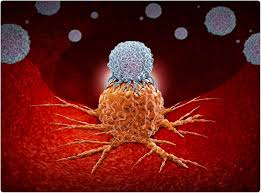
Glioblastomas are what oncologists call “cold tumors.” Unlike “hot” tumors (such as certain skin or lung cancers), glioblastoma is a master of disguise. It creates a microenvironment that suppresses the immune system, essentially hiding from the body’s T-cells.
The research team focused on a cellular pathway called STING (Stimulator of Interferon Genes). Think of STING as a biological “alarm system.” When activated, it alerts the immune system that a foreign invader or dangerous cell is present.
While STING-activating drugs exist, they are fragile and break down quickly in the bloodstream. To solve this, the team collaborated with Chad A. Mirkin, PhD, at Northwestern University, who invented Spherical Nucleic Acids (SNAs). These are tiny gold nanoparticles studded with dense strands of DNA.
From the Nose to the Neurons
In the study, researchers administered these SNAs via simple nasal drops to mice with glioblastoma. The results were visually and biologically striking:
-
Precision Targeting: Using near-infrared light tags, the team tracked the medicine as it traveled along the trigeminal nerve—the large nerve connecting facial structures to the brain—completely bypassing the blood-brain barrier.
-
Localized Action: The medicine concentrated in the tumor and nearby lymph nodes without spreading to other organs, significantly reducing the risk of systemic side effects.
-
Immune Awakening: Once in the brain, the SNAs successfully activated the STING pathway, “warming up” the cold tumor and allowing immune cells to recognize and attack the cancer.
“This is the first time that it has been shown that we can increase immune cell activation in glioblastoma tumors when we deliver nanoscale therapeutics from the nose to the brain,” said Akanksha Mahajan, PhD, the study’s first author.
A Potential Cure through Synergy
Perhaps the most encouraging finding occurred when the nasal drops were used in combination with checkpoint inhibitors—a common class of immunotherapy drugs that help T-cells stay active.
In the mouse models, this “one-two punch” eradicated the tumors with just one or two doses. Even more impressively, it induced long-term immunity, meaning the mice’s immune systems were trained to recognize and destroy the cancer if it tried to return.
The Road Ahead: Caution and Hope
While the results are a landmark achievement, experts urge patience. Translating success in mice to human patients is a rigorous process that can take several years.
“It is a brilliant delivery mechanism,” says Dr. Elena Rossi, an independent neuro-oncologist not involved in the study. “However, the human brain is significantly larger and more complex than a mouse brain. We need to ensure these nanoparticles can travel the necessary distance in humans and that the immune response is strong enough to handle a much larger tumor mass.”
Dr. Stegh also cautioned that STING activation is not a “magic bullet” on its own. Glioblastoma is resilient and often develops secondary ways to shut down the immune system. Future iterations of the nanodrops may need to carry multiple “payloads” to hit three or four different cancer pathways at once.
What This Means for Patients
For those currently battling glioblastoma and their families, this research offers a glimpse of a future where treatment is less traumatic. Instead of repeated, invasive brain injections that carry risks of infection and neurological damage, a patient might one day manage their condition with a daily or weekly nasal spray at home.
The team is now working toward clinical trials to test the safety and efficacy of these SNA nasal drops in humans. If successful, the technology could potentially be adapted for other “treatment-resistant” cancers and neurological disorders.
Medical Disclaimer: This article is for informational purposes only and should not be considered medical advice. Always consult with qualified healthcare professionals before making any health-related decisions or changes to your treatment plan. The information presented here is based on current research and expert opinions, which may evolve as new evidence emerges.
References
Primary Study:
-
Mahajan, A. S., et al. (2025). “cGAS-agonistic spherical nucleic acids reprogram the glioblastoma immune microenvironment and promote antitumor immunity.” Proceedings of the National Academy of Sciences (PNAS). DOI: 10.1073/pnas.2409557122.