 0
0
 0
0
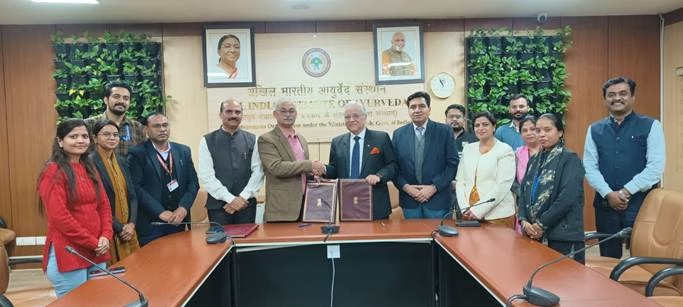
NEW DELHI — In a landmark move for the Indian healthcare landscape, the All India Institute of Ayurveda (AIIA) announced on February 10, 2026, the signing of a comprehensive Memorandum of Understanding (MoU) with the General Insurance Council (GIC). This historic agreement brings the country’s premier Ayurveda institute into the fold of 32 general insurance companies, allowing patients to access cashless treatment for the first time at this scale.
The partnership marks a pivotal shift in how traditional medicine is integrated into the national financial ecosystem. By removing the barrier of “out-of-pocket” expenses, the initiative aims to make evidence-based Ayurvedic care as financially accessible as conventional allopathic medicine.
Breaking the Financial Barrier to Traditional Care
For decades, one of the primary hurdles for patients seeking Ayurvedic treatment has been the lack of seamless insurance coverage. While many policies technically covered “Ayush” (Ayurveda, Yoga, Unani, Siddha, and Homeopathy), the reimbursement process was often cumbersome, requiring patients to pay upfront and navigate a labyrinth of paperwork later.
The new MoU, signed by Prof. (Vaidya) P. K. Prajapati, Director of AIIA, and Shri Segar Sampathkumar, Director (Health) of the GIC, changes that dynamic.
“With the signing of this MoU, AIIA has become eligible to provide cashless treatment services under all 32 insurance companies associated with the General Insurance Council,” stated Prof. Prajapati. “This initiative will significantly benefit patients by improving access, affordability, and trust in Ayurveda-based healthcare.”
The empanelment means that any policyholder with a plan from one of these 32 insurers can now walk into the 200-bed AIIA referral hospital and receive treatment—ranging from complex Panchakarma therapies to specialized surgical interventions—without the immediate burden of payment, provided the services are covered under their specific policy.
Modern Infrastructure Meets Ancient Wisdom
The All India Institute of Ayurveda is not a traditional clinic in the archaic sense. It is an apex “tertiary care” hospital that blends ancient protocols with modern diagnostic technology. The facility houses 25 specialty departments, 12 clinical units, and 8 interdisciplinary research laboratories.
Medical experts suggest that the “cashless” status will likely increase the patient inflow for chronic conditions where Ayurveda has shown significant efficacy, such as:
-
Musculoskeletal disorders (Arthritis, Spondylitis)
-
Lifestyle diseases (Type 2 Diabetes, Hypertension)
-
Autoimmune conditions
-
Neurological rehabilitation
Prof. Bejon Kumar Misra, Chairman of the Core Group of Experts on Ayush Health Insurance, emphasized the historical weight of this development. “This is the first time in the country that an Ayush institution has entered into a formal empanelment agreement with the General Insurance Council. It strengthens institutional credibility and expands outreach to a wider population.”
Navigating the New System: The Ayush Helpline
To support this transition, the Ministry of Ayush has launched a dedicated Ayush Health Insurance Helpline. This service is designed to bridge the “information gap” that often plagues insurance claims.
-
Helpline Number: 1800-11-0008
-
Operational Hours: 9:30 AM to 5:00 PM (All working days)
The helpline serves as a resource for beneficiaries to verify which treatments are covered, understand the “cashless” authorization process, and resolve disputes with insurance providers.
Public Health Implications: The Shift Toward “Integrative” Health
From a public health perspective, the inclusion of Ayurveda in the GIC’s cashless network is a strategic move toward Universal Health Coverage (UHC). By diversifying the types of treatment available through insurance, the government is essentially acknowledging that a “one-size-fits-all” approach to medicine may not be the most efficient or cost-effective.
Statistical Context:
According to recent data from the Insurance Regulatory and Development Authority of India (IRDAI), the “Ayush” segment has seen a 20% year-on-year growth in consumer interest. However, actual claims remained low due to the lack of “cashless” facilities at reputable institutes. The AIIA-GIC pact is expected to trigger a significant uptick in these figures, potentially reducing the load on over-burdened allopathic hospitals for chronic care management.
Limitations and Considerations
While the announcement is a victory for proponents of traditional medicine, healthcare analysts urge a balanced view.
-
Standardization of Costs: Unlike allopathic procedures (like a bypass surgery or a cholecystectomy), Ayurvedic treatments can vary in duration and intensity based on the individual’s Prakriti (constitution). The GIC and AIIA will need to maintain rigorous standardization to ensure insurance premiums remain stable.
-
Evidence-Based Necessity: Insurance providers typically only cover treatments deemed “medically necessary.” Patients should consult with their providers to ensure their specific Ayurvedic protocol is recognized as a therapeutic necessity rather than a “wellness” or “spa” treatment.
-
Policy Variations: Not all 32 insurance companies offer identical Ayush coverage. The extent of the “cashless” facility will still depend on the individual’s policy limits and sub-limits for Ayush treatments.
A Step Toward Global Standardization
The AIIA also hosts an International Collaborative Centre, and this move toward insurance integration brings Indian traditional medicine closer to international healthcare standards. In countries like Germany and Switzerland, integrative medicine is frequently covered by national insurance, provided there is a high level of institutional clinical validation.
By formalizing the relationship between the GIC and an apex body like the AIIA, India is setting a template for how traditional knowledge can be validated and financed in the 21st century.
“The availability of cashless treatment… is expected to enhance patient confidence and contribute to the sustainable growth of Ayush healthcare services,” added Prof. Misra.
For the average consumer, this means that the choice between “modern” and “traditional” medicine is no longer a financial decision, but a clinical one—made in consultation with doctors and supported by the safety net of insurance.
Medical Disclaimer
This article is for informational purposes only and should not be considered medical advice. Always consult with qualified healthcare professionals before making any health-related decisions or changes to your treatment plan. The information presented here is based on current research and expert opinions, which may evolve as new evidence emerges.
References and Sources
Primary Source:
-
Press Information Bureau (PIB) Delhi. “All India Institute of Ayurveda Signs MoU with General Insurance Council to Provide Cashless Treatment Facility.” Posted February 10, 2026.