 0
0
 0
0
NEW DELHI — In a landmark achievement for regenerative medicine, two women previously deemed infertile due to severe uterine scarring have successfully given birth to healthy infants at Sir Ganga Ram Hospital. The breakthrough, involving the use of umbilical cord-derived stem cells, marks the first reported live births in India using this specific regenerative technique. The success offers a potential lifeline to millions of women suffering from Asherman’s syndrome, a condition where the uterine cavity is obstructed by scar tissue, often rendering traditional fertility treatments ineffective.
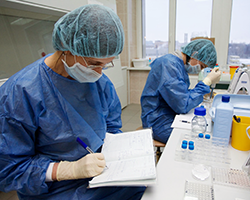
The milestone is part of an ongoing pilot clinical trial conducted by the hospital’s Centre for IVF and Human Reproduction in collaboration with its Department of Biotechnology and Research. Of the ten patients enrolled in the trial, these two successful deliveries provide the first clinical evidence in the country that mesenchymal stem cells can effectively “reboot” a damaged uterine lining.
Understanding the “Silent” Barrier to Pregnancy
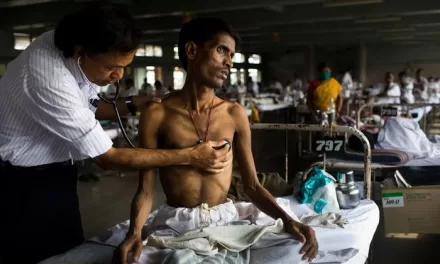
Asherman’s syndrome, or intrauterine adhesions (IUA), is a condition characterized by the formation of tough, fibrous scar tissue within the uterus. This scarring often occurs following medical interventions such as dilation and curettage (D&C), postpartum complications, or infections like genital tuberculosis—the latter being a significant contributor to infertility cases in South Asia.
The impact on a woman’s reproductive health is profound. The scar tissue can lead to:
-
Amenorrhea or Hypomenorrhea: Absent or unusually light menstrual periods.
-
Recurrent Pregnancy Loss: The inability of the uterine lining to support a growing fetus.
-
Secondary Infertility: The inability to conceive again after a previous pregnancy.
“In severe cases of Asherman’s, the endometrium (uterine lining) is so badly damaged that it cannot thicken enough to allow an embryo to implant,” explains Dr. Abha Majumdar, Chairperson of the IVF Centre at Sir Ganga Ram Hospital. “Standard treatments, like surgical removal of scars, often see recurrence rates as high as 30% to 60%, leaving many women with no choice but surrogacy or adoption.”
The Science of Regeneration: Why Umbilical Cells?
The clinical team turned to umbilical cord-derived mesenchymal stem cells (UC-MSCs). These cells, harvested from the jelly-like substance (Wharton’s jelly) within umbilical cords, are biological powerhouses. Unlike other cell types, UC-MSCs possess unique anti-inflammatory and immunomodulatory properties, meaning they can repair tissue without triggering a negative immune response.
During the procedure, these stem cells were precisely injected into the basal layer of the patients’ endometrium using an IVF ovum pick-up needle under hysteroscopic guidance. This “targeted delivery” allowed the cells to secrete essential growth factors, stimulating the body’s natural repair mechanisms to regrow a functional uterine lining.
Following the treatment, researchers observed a significant increase in endometrial thickness—moving toward the $7\text{–}14\text{ mm}$ range required for successful implantation—and a marked improvement in menstrual flow.
Real-World Success: Two Families Transformed
The results of the trial have already changed lives:
-
Case One: A 39-year-old woman with a history of severe adhesions following a miscarriage. After the stem cell therapy and a subsequent frozen embryo transfer, she delivered a healthy 2 kg baby boy at 35 weeks.
-
Case Two: A 40-year-old woman who had faced recurrent pregnancy losses. She gave birth to a 1.8 kg baby girl via cesarean section at 31 weeks.
While both infants were born slightly preterm, medical reports confirm they are healthy. The remaining eight participants in the trial remain under close clinical observation.
A Growing Global Evidence Base
The success in New Delhi aligns with a growing body of international research. A 2025 systematic review of stem cell therapy for intrauterine adhesions reported clinical pregnancy rates of approximately 46% following treatment. Furthermore, a 2020 meta-analysis highlighted that combining stem cells with traditional hormone therapy significantly improved both menstruation and pregnancy outcomes compared to surgery alone.
Experts suggest that the “paracrine effect”—where stem cells signal nearby cells to behave differently—is the key. These signals promote angiogenesis (the growth of new blood vessels) and reduce fibrosis (scarring), effectively “healing” the uterine environment from the inside out.
Expert Perspectives: Cautious Optimism
While the medical community is celebrating, many urge a balanced view. “This is a remarkable milestone for reproductive medicine in India,” says Dr. Majumdar. “However, it is essential to view this as a pioneering step toward a standardized protocol rather than a final solution for all.”
Independent experts, such as those cited in recent reviews in Stem Cells Translational Medicine, emphasize that while the safety profile of UC-MSCs is high, the medical field still lacks large-scale, randomized controlled trials (RCTs). Questions remain regarding the long-term safety of the procedure, the optimal dosage of cells, and the risk of complications such as placenta accreta (where the placenta grows too deeply into the uterine wall).
Public Health and the Future of Fertility
In India, where surrogacy regulations have become more stringent in recent years, the ability to restore a woman’s own fertility is of paramount importance. If stem cell therapy becomes a standardized treatment, it could significantly reduce the emotional and financial burden of infertility.
However, challenges remain:
-
Accessibility: High-tech regenerative therapies are currently expensive and limited to specialized urban centers.
-
Scalability: Standardizing the “dose” and “timing” of stem cell injections across different hospitals is a major hurdle.
-
Preterm Risks: The fact that both successful births in this trial were preterm suggests that while the uterus was repaired enough for pregnancy, it may still face challenges in carrying to full term.
The Path Forward
The Sir Ganga Ram Hospital team plans to continue monitoring the pilot group while calling for multicenter trials. As regulatory bodies like the Indian Council of Medical Research (ICMR) evaluate these findings, there is hope that India could emerge as a global leader in regenerative gynecology.
For women currently struggling with Asherman’s syndrome, this breakthrough suggests that a diagnosis of “untreatable” uterine damage may soon become a thing of the past.
Medical Disclaimer: This article is for informational purposes only and should not be considered medical advice. Always consult with qualified healthcare professionals before making any health-related decisions or changes to your treatment plan. The information presented here is based on current research and expert opinions, which may evolve as new evidence emerges.
References
-
Sir Ganga Ram Hospital. (2026, March). Stem Cell Therapy Enables Two Women With Asherman’s Syndrome To Become Mothers. NDTV Health.