 0
0
 0
0
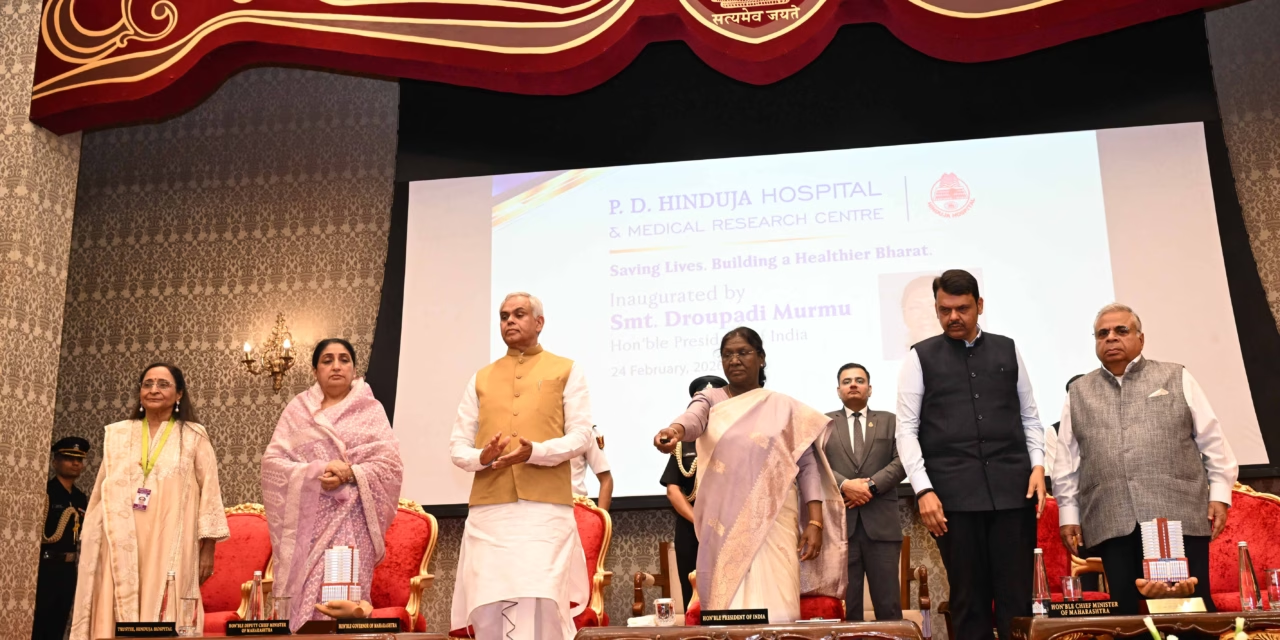
MUMBAI – In a move signaling a major shift toward integrated public-private healthcare, President Droupadi Murmu officially inaugurated the nationwide campaign “Saving Lives and Building a Healthier Bharat” at Lok Bhavan on February 24, 2026. Organized by the P.D. Hinduja Hospital & Medical Research Centre, the initiative aims to bridge the critical “last-mile” gap in emergency medical response and high-quality care for India’s most vulnerable populations.
Addressing a distinguished gathering of medical professionals, policymakers, and industry leaders, President Murmu emphasized that the health of India’s 1.4 billion citizens is no longer the sole responsibility of the state.
“The health of the citizens is a collective responsibility,” the President stated. “All stakeholders must work together to ensure that even the poorest of the poor receive timely and proper medical care. ‘Affordable World-Class Healthcare Services to All’ should be everyone’s mission.”
The “Golden Hour”: A Race Against Time
A central pillar of the new campaign is the optimization of the “Golden Hour”—the first 60 minutes following a traumatic injury or medical emergency, such as a heart attack or stroke. Research consistently shows that prompt intervention during this window significantly increases survival rates and reduces long-term disability.
To support this, the President highlighted the expansion of the PM Relief Scheme, which provides cashless treatment up to ₹1.5 lakh for accident victims. However, medical experts argue that financial aid is only effective if the infrastructure exists to transport patients quickly.
“Infrastructure like trauma centers and ambulances are the hardware, but awareness is the software,” noted Dr. Anjali Nayyar (name used for expert perspective), a public health specialist not affiliated with the hospital. “A nationwide campaign that educates the public on basic life support and emergency signaling can be the difference between life and death in rural corridors.”
Scaling the Digital Backbone: AI and Innovation
The campaign arrives as India aggressively integrates Artificial Intelligence (AI) into its clinical workflows. President Murmu noted that the IndiaAI Mission is currently fostering an ecosystem where AI-enabled diagnostics can reach remote villages where specialists are scarce.
From AI-powered ECG interpretations to predictive analytics for disease outbreaks, the “Healthier Bharat” initiative seeks to utilize these technologies to lower costs. Currently, India remains a global leader in pharmaceutical production—often called the “Pharmacy of the World”—yet it remains heavily dependent on imports for high-end medical devices like MRI machines and robotic surgical tools.
“These imported devices pose a significant financial burden for ordinary people,” the President remarked, urging the business community to leverage the Production Linked Incentive (PLI) schemes to manufacture critical medical equipment domestically.
Progress by the Numbers: The Ayushman Bharat Impact
The President provided a status report on the government’s flagship health programs, illustrating the scale of the challenge and the progress made over the last decade:
| Initiative | Impact/Scale |
| Ayushman Arogya Mandirs | 180,000+ centers nationwide |
| Ayushman Bharat Yojana | 12 crore families covered (₹5 lakh/year) |
| Medical Education | Record increase in MBBS and PG seats |
| Specialized Care | New AIIMS established across multiple states |
Despite these staggering numbers, the “Saving Lives” campaign acknowledges that government programs alone cannot achieve the goal of Viksit Bharat (Developed India) by 2047. The involvement of private institutions like P.D. Hinduja Hospital is seen as a necessary catalyst for innovation and specialized training.
Public Health Implications: The Shift to Preventive Care
While the campaign focuses heavily on emergency “life-saving” measures, it also aligns with national missions such as the TB-Free India Campaign and the Sickle Cell Anemia Eradication Mission.
Medical professionals suggest that the campaign’s success will be measured by its ability to shift the national mindset from “curative” care (treating illness) to “preventive” care (maintaining wellness). By involving community stakeholders, the campaign seeks to improve health literacy—empowering citizens to recognize early symptoms of non-communicable diseases (NCDs) like diabetes and hypertension, which currently account for over 60% of deaths in India.
Challenges and Counterarguments
While the inauguration was met with optimism, some health advocates urge caution. Critics of private-sector-led campaigns often point out that “world-class” care is frequently concentrated in urban hubs like Mumbai, Delhi, and Bangalore.
“The challenge for any nationwide campaign is ensuring it doesn’t become ‘urban-centric,'” says Dr. Rajesh Kumar, a rural health advocate. “Building a ‘Healthier Bharat’ requires more than just high-tech hospitals in cities; it requires the transfer of expertise to the primary health centers in the hinterlands.”
Furthermore, while the push for “Make in India” medical devices is vital for long-term affordability, the immediate transition may face hurdles regarding international patent laws and the time required for domestic products to meet rigorous global safety standards.
What This Means for You
For the average citizen, the “Saving Lives and Building a Healthier Bharat” campaign signals three major changes:
-
Improved Emergency Access: Increased focus on trauma care and ambulance networks.
-
Affordability: A continued push to lower the cost of medicines and diagnostics through domestic manufacturing.
-
Community Empowerment: Expect more local workshops and digital resources focused on emergency response and preventive health.
As India marches toward 2047, the message from the highest office is clear: a nation is only as strong as its healthiest citizen.
Medical Disclaimer: This article is for informational purposes only and should not be considered medical advice. Always consult with qualified healthcare professionals before making any health-related decisions or changes to your treatment plan. The information presented here is based on current research and expert opinions, which may evolve as new evidence emerges.
References & Sources
Official Statements & Reports:
-
Press Information Bureau (PIB) Delhi: “President of India Inaugurates Nationwide Campaign of PD Hinduja Hospital,” Posted Feb 24, 2026.